This post contains some affiliate links. I only recommend stuff I actually use or book myself. If you grab something through one of these links, it won’t cost you extra, but it helps keep this blog running. Thank you! 💛
Zagreb sits at the junction between European cultures. The central European influence is unmistakable, with it’s history intertwined with the Habsburg empire, while also maintaining a very distinct ‘Balkan’ identity. The Habsburg influence is far stronger than other former Austrian Empire cities in the Balkans, in part due to it’s longer rule from the empire than say Sarajevo, but also linked to this, it’s defence from Ottoman rule, with the extent of the former empire being right up to, but not including, Zagreb’s doorstep.
The result architecturally is a classic example of Central European/Habsburg architecture; grand facades, stone monuments, grand cathedrals, all the works. It does, however, have Balkan roots and a strong Balkan identity, thanks in part to its incorporation into Yugoslavia straight after it broke from the Austrian Empire, and largely due to the key ethnic group being Croats. It was a melting point for all Balkan ethnicities, with Serbs being a particularly large group, however due to the conflict, many fled, and the battle scars are very apparent in the modern city.
I visited here, really for one day, but with two nights… kind of. I went here as a part of my European trip in October last year, which saw me travel across the continent to 7 countries, and I’ve been making blogs about everywhere. The chronological blog list (of what ive made so far) is: Venice, The £20 Upper Adriatic Pass, this blog, 3 countries, 3 meals, 1 day, and Palma (coming soon). I got into Zagreb just before midnight on the 19th October, and left for the airport at 3AM on the 21st, so the time restrictions were tight and I only had one day to experience the city, so this is what I did, and how I saved money where I could.
Zagreb’s hostels
To save money on this frankly ridiculous trip, I stayed in hostels the whole time, staying in 3 different cities. My total fopr hostels stayed in is 4 now, so while not the most seasoned, I feel like I have a decent benchmark for hostels now. With that being said, reviews are everything when looking at hostels, and even though Hi Hostel had a 7.1 on Hostelworld, I would never recommend it to anyone. But I’ll start with the good first.
The hostel was pretty central, just a few minutes north of the Glavni Kolod Train Station (Zagreb’s central station), a couple of minutes east of the Zagreb Art Pavilion & its gardens, and 10 minutes, give or take, from Ban Josip Jelačić Square (the main square), and the old town of ‘Gornji Grad’. Definitely bonus points here, although I wrongly assumed it was the very centre, I feel the old town may be more central for tourists, while offering more hostel choices too. It was still very central, and I had no trouble getting around and returning to the hostel as a base camp, but that’s where the good runs out.
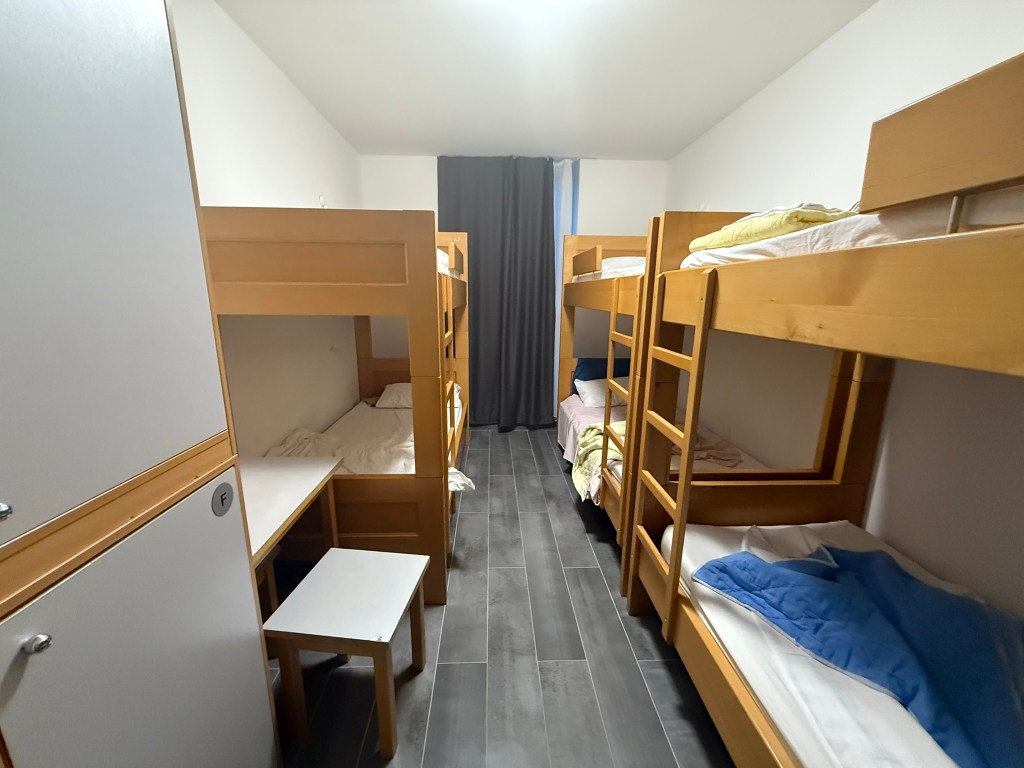
Looking at reviews, there’s reports of bed bugs and other nasties, so maybe I should’ve looked at that. I slept just fine, not the comfiest bed but still, but the bunk beds weren’t built in, and very open and exposed to everyone. The bathrooms were falling to pieces, I even got locked inside a stall at one point! The reception was a bit rough, but the workers were nice. The hallways, dorms themselves, and public spaces were all just a bit tired-looking. It was all serviceable, for the most part, but considering that for a couple more euros, any other hostel in a very central location will give you something like a decent kitchen area/lounge, nice enough bathrooms, extra amenities, modern finishes, an on-site bar/club, even free buffet breakfasts or all of the above (shoutout the Kabul Party Hostel in Barcelona), this hostel just seemed to lag behind in every respect, and it had a less safe aura around it compared to the others I’ve been to. I didn’t feel endangered at all, just disappointed, and even more so looking at other hostels nearby in retrospect.
I was being precious here. Per night, this hostel is €16, whereas hostels inside the old town start at €19, with scores being higher, and for €22, you can get an 8.9 rated hostel in the dead centre called ‘Main Square’. With free breakfasts, along with built-in bunk beds with privacy, that looks like the much better deal. I’m by no means discouraging anyone from staying in hostels, but Hi hostel is one to avoid, regardless of the price. Really, the reviews and score alone say it all, and so do the photos. So this acts as a warning, please, please check the places you stay in before booking, even if it’s rushed, and just a quick check!
I always use HostelWorld for hostels; they give a score out of 10, show reviews, and plenty of photos, along with any amenities. But, if you’re now understandably put off hostels after my mini-rant here, Trivago has so many options between £20-£30, near or in the city centre. They also seemingly have different options to HostelWorld for hostels, too, so I think it’s worth checking out regardless of how you want to spend your time here. Now, with all that out the way, on to what I did!
sightseeing in gornji grad
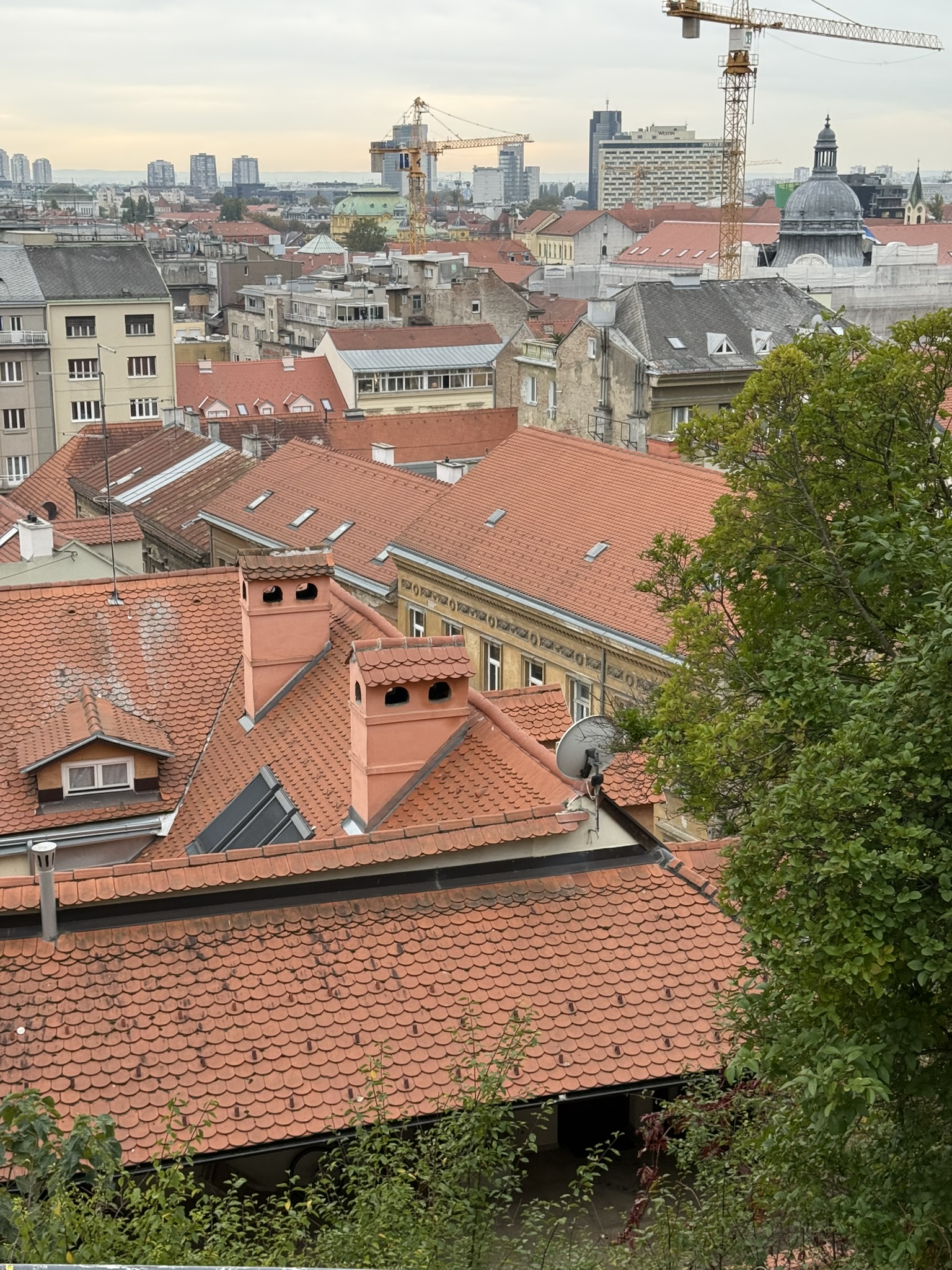
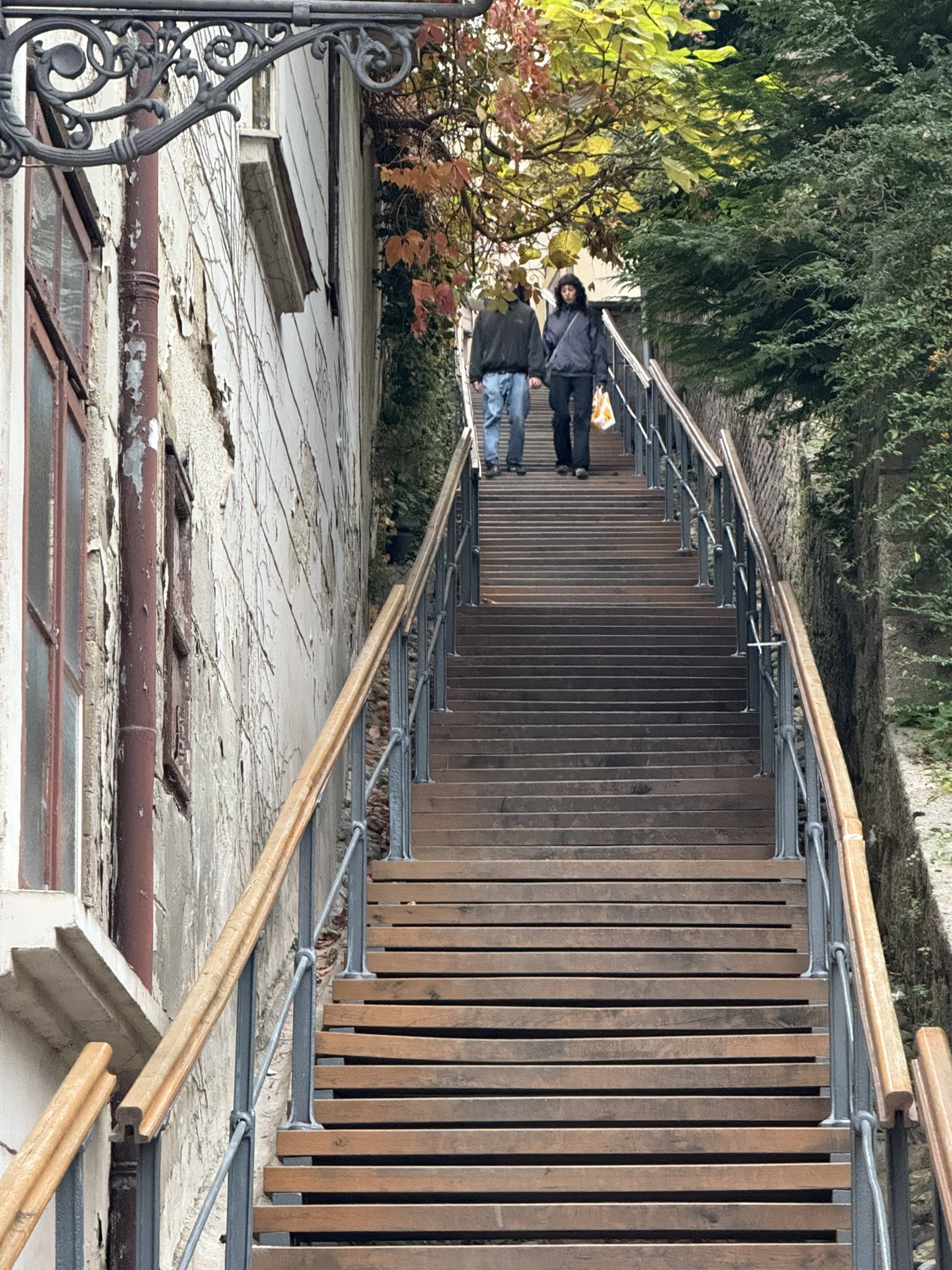
The Upper Town area is the oldest part of the city. It’s dense, elevated and loaded with must-see sights. It’s not the ‘whole’ of the city, there’s definitely a whole load more to see and do outside this area, but it is a place to focus a lot of time and energy, especially if you’re on a strict time constraint. Wandering around the winding streets, you’ll find churches, never-ending staircases, beautiful viewpoints at pubs & cafes, government buildings, historical city walls and reminders of previous wars.
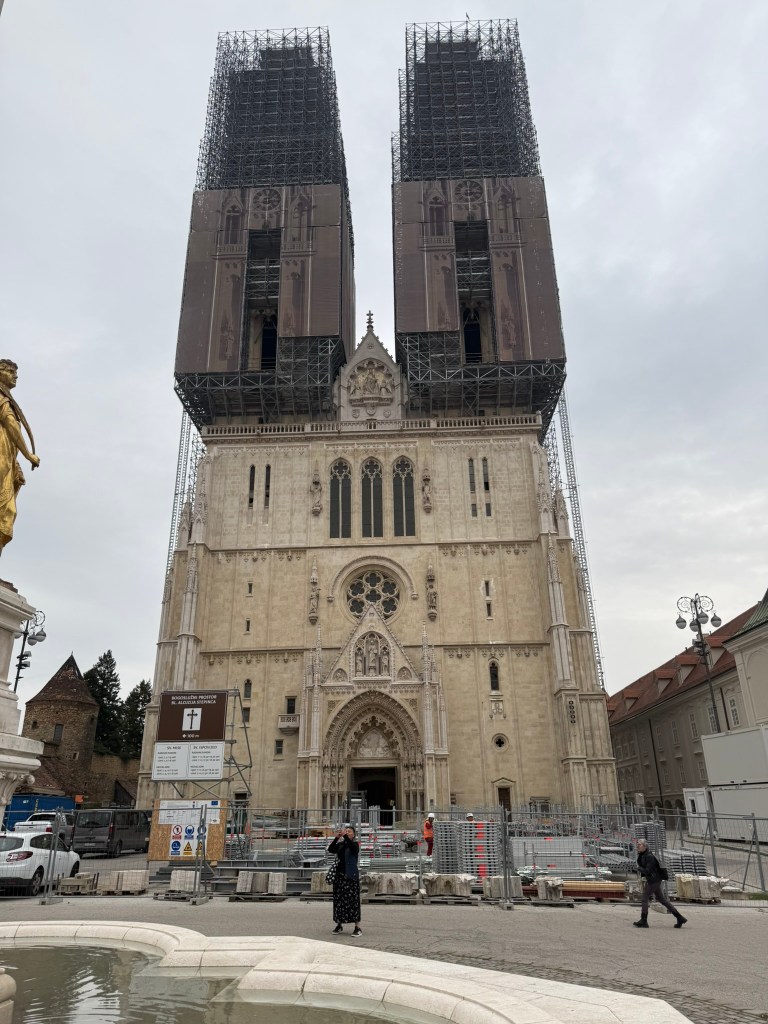
The first sight I saw was the Cathedral. It’s striking, and beautifully set. I wandered towards it from the central square, I walked through the (not open) Dolac, a farmer’s market in Zagreb. There ere some stalls open, scattered around the central mass of unoccupied stalls, and there were plenty of surrounding businesses open. I found some €1 magnets for the collection, some even cheaper pastries, and basked in the shadow of the Cathedral.
When I went in late October 2025, the Cathedral was closed. An earthquake in 2020 led to 6 years of intense refurbishment, and the interior has since been re-opeed as of Christmas 2025. Works to fully restore the building are still ongoing, and will be for some years, but more scaffolding and images covering up the damages are being removed every month, and the structure is thus becoming more impressive daily. For example, one oof the two twin spires has been unshackled from scaffolding since I visited, and it’s former glory is getting closer. Entry is free, and now that it is safe and possible to enter, it’s something you should 100% do.
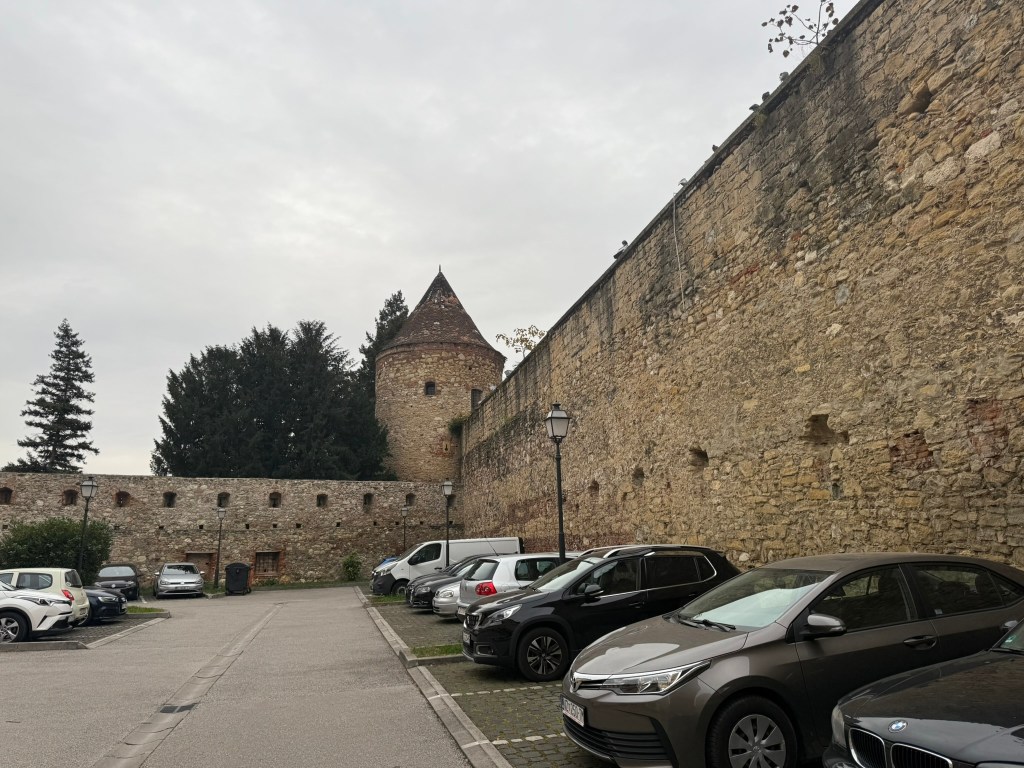
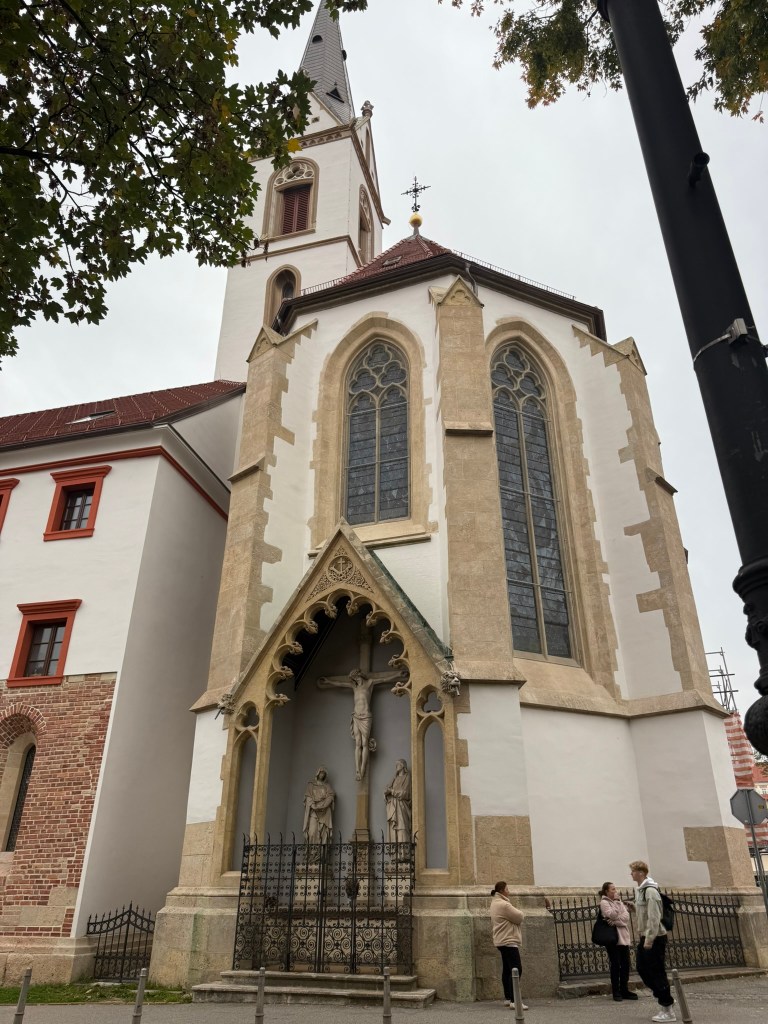
Heading loosely north west, you get to see a few things; the surrounding walls of the cathedral & Kaptol Fortress, Ribnjak Park to the north, and tons of churches. The fortress grounds connect up to the park, with parts of the towers being open sometimes. It’s a great place to unwind and de-stress, before moving towards the parliament. Along the way, I came across the Saint Francis’s Church. Again, the church is open to the public (except during mass), but I didn’t seem to check if it was open thoroughly, and due to renovations from the earthquake (a common theme sadly), isn’t always open.
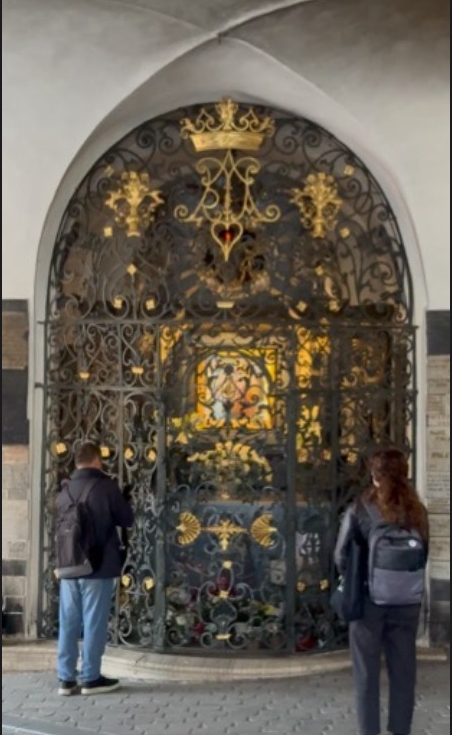
Just before the parliament complex, there’s a stone gate (Kamenita vrata), with a shrine to the Virgin Mary built into it. It’s the only remaining 13th-century gate, that served as the only entry to the old religious city of Gradec (Zagreb’s old walled city). Upon my research later, the shrine is there, as in a fire in spring 1731, which spread across the whole city, a photo of Saint Mary was found amongst the rubble a few days afterwards. The frame had been desecrated, but the canvas itself was untouched. This was seen as a miracle, and a shrine is now in place within the carriageway of the gate.
As much as I yap about religious sites, churches, mosques, etc., I’m still an atheist. Historically, religion was a massive driving factor in construction, and beauty. As a result, religious sites are always beautiful, and interesting. Not to mention, a lot of religious temples/places of worship are free entry! They also just have a certain feel. For example, walking into the Hagia Sophia in Istanbul, or the silent prayer area in the central chapel in the Apse of the Sagrada Familia in Barcelona (coming soon), both places called for silent reflection and evoked some unique emotions. Although I passed through the stone gate briskly, I couldn’t help but pause, reflect, and process at the shrine, along with the many others praying to it.
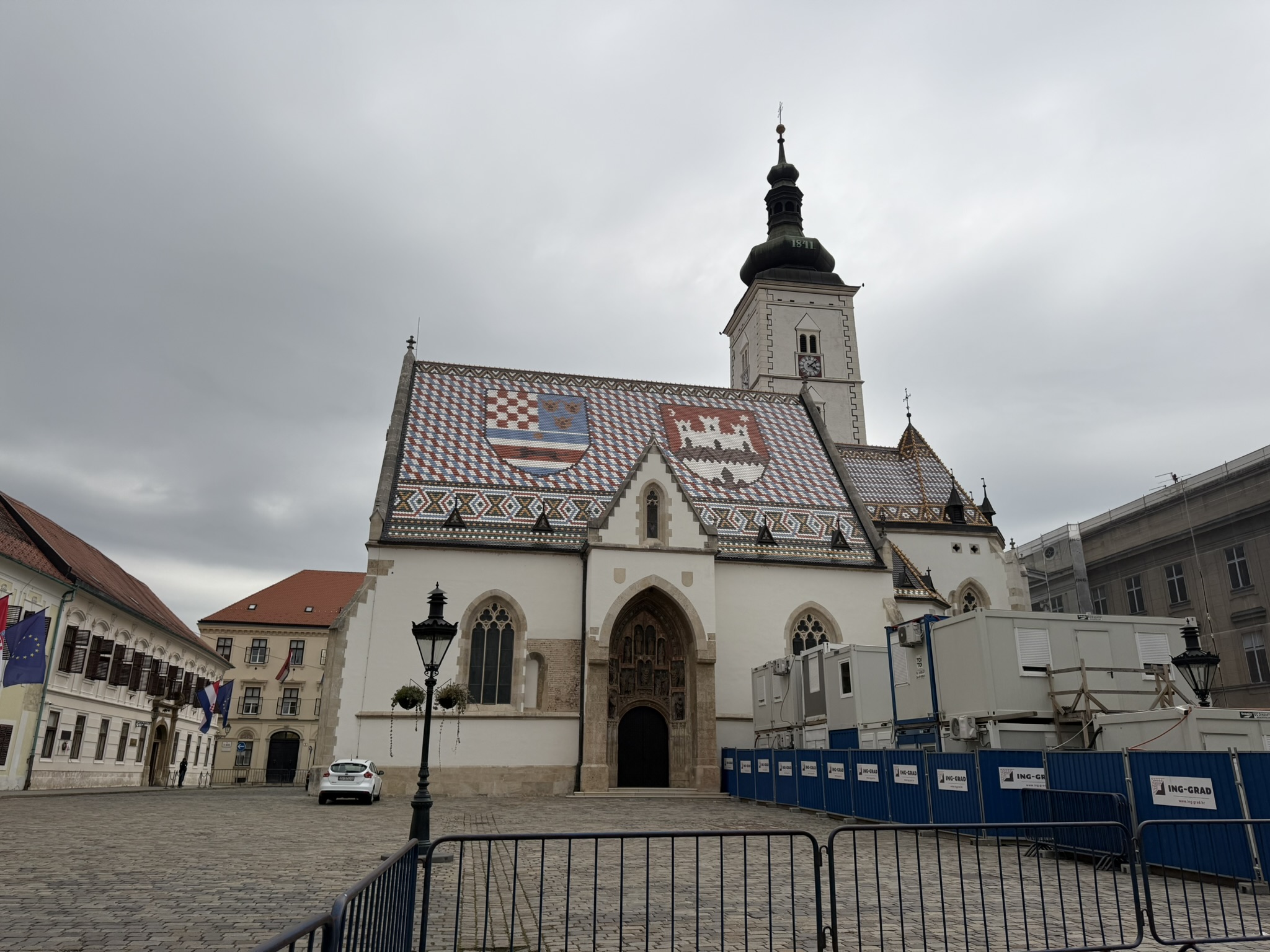
Passing through and onwards, I hit the Parliament (Saint Mark’s Square), with the famous St. Mark Church in the dead centre. The church is in the dead centre of the square, acting as the focal point. Two governmental buildings flank the square, one being Croatia’s parliament. As a result, the square has railings around it, and I would not be surprised if, on busier days, police are there too. You can also only enter the church if you’re going to mass; however, neither of those things matter. The street offering views of the square, which was right after the gate, offers by far the best views of the whole scene you’ll get. And the real star of the show isn’t the inside anyway, it’s that beautiful, colourful, intricate roof. I mean seriously, I stared at it for ages.
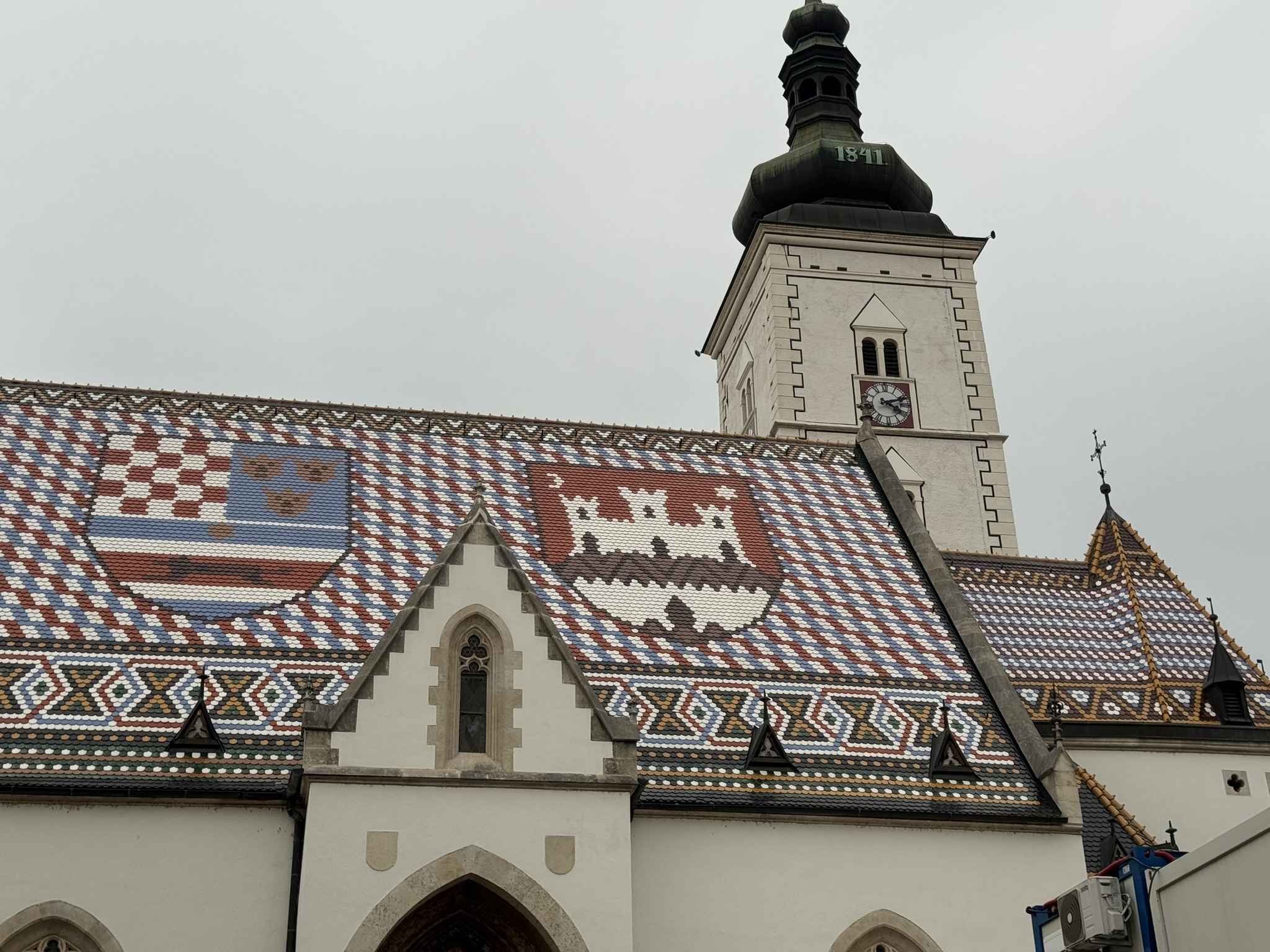
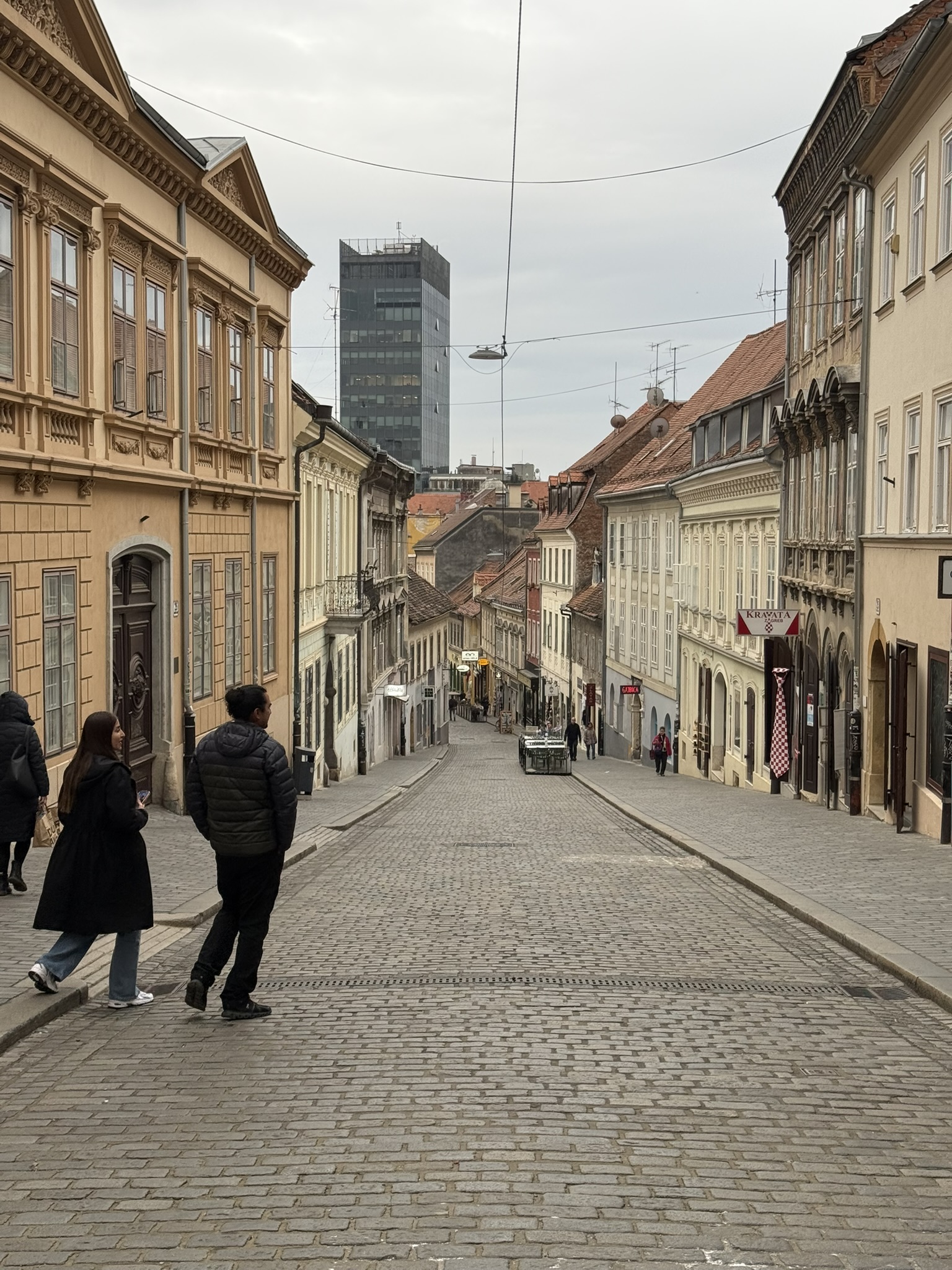
As a side note, around this area is the Museum for Broken Relationships. I saw it signposted a lot, so I knew it was important, but I just didn’t have the time for any museums, sadly. Upon further research, it seems to be a devastating and sobering museum, and something I want to see. It seems genuinely very interesting. Tickets are £6 on GetYourGuide if you’re interested, but it really seems worthwhile.
Directly south along the same road, you reach the Lotrščak Tower, a square tower that guarded one of the city’s gates. It too is from the 13th century. At midday, there’s a cannon that fires a dead load to mark the time. I missed this sadly. I probably overslept from all the travel the day before, but I’d love to go back and hear it! Right next to it is a funicular, which was undergoing repairs due to that earthquake. They should be done within a year. Below the tower and next to the funicular is a viewpoint, with great panoramas of Zagreb & the valley, along with a nice café/bar with views, but more on that later.
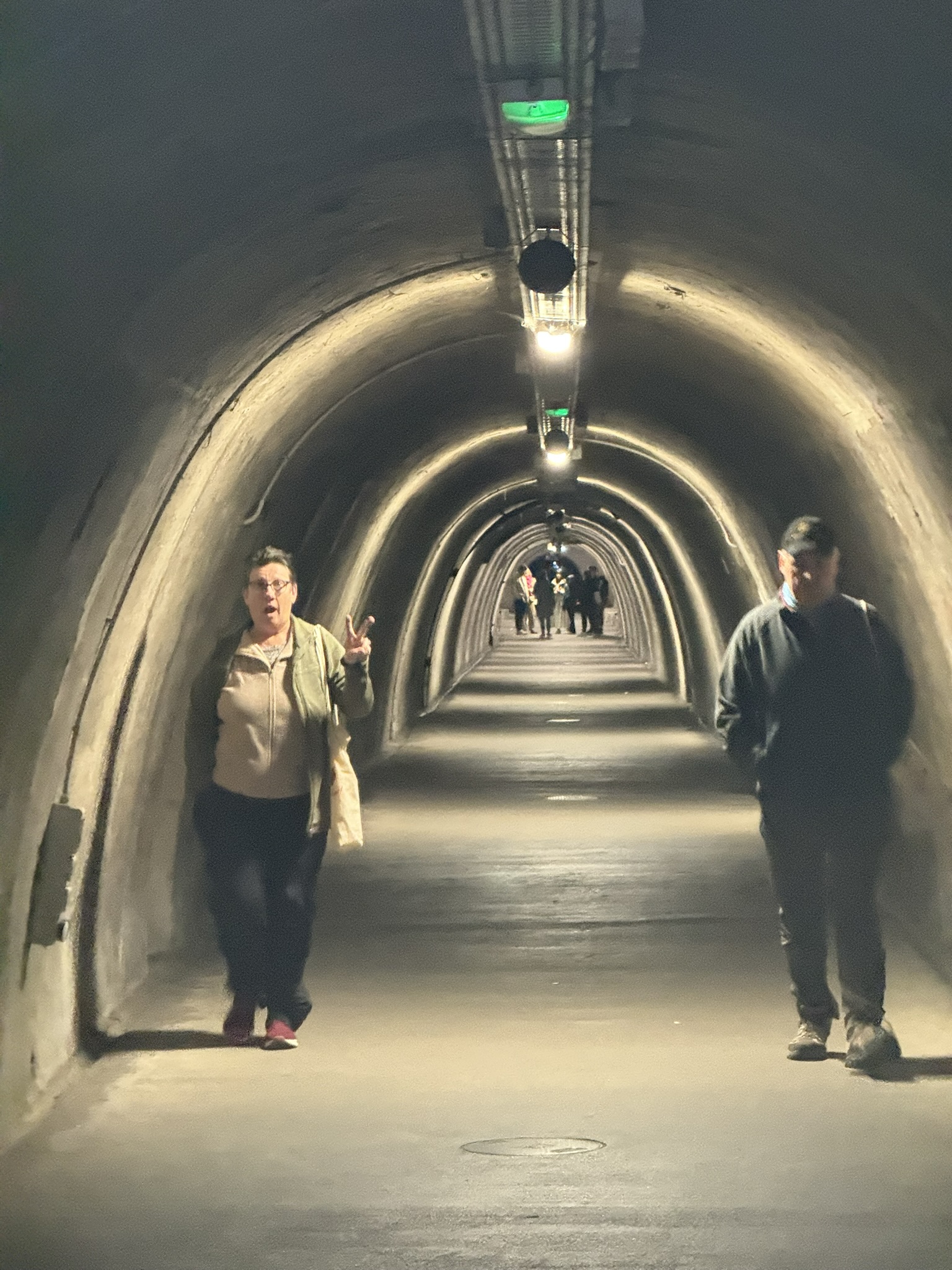
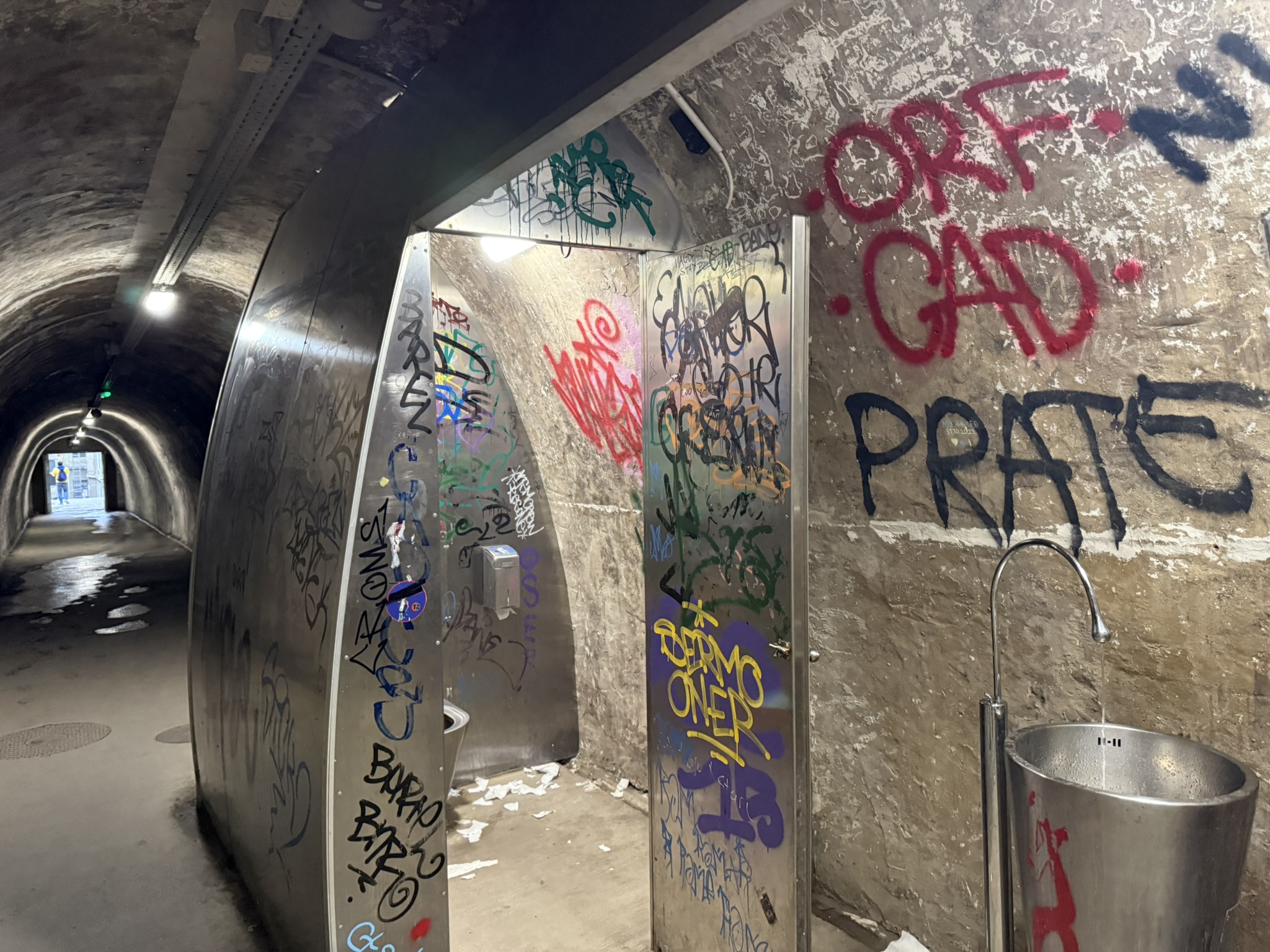
I went just to the west of this area, down a scenic staircase, left and stumbled across an entrance to the Grič Tunnel. The tunnel complex connects to the ‘art park’, and has seasonal art displays, one-off events, and big plans for an interactive museum. As of now, you can walk through them, as many tourists seemingly do, in a gritty-yet-safe-feeling environment, especially considering its history. The tunnels were built during the latter half of WW2, as an air raid shelter from fear of Allied bombings. Post-war, the tunnels were braced secure and abandoned. They were home to squatters & illegal activities, before becoming a rave spot in the early 90’s. The Croatian war for independence ended this, and it became an Air Raid Shelter again, with toilets being installed. Post-war, again, they were left abandoned, used for squatting and raves, until their full renovation in 2015-16. Now, you can see remnants of its life, both wars and other activities.
There’s lots I missed I’m sure, and I wish I could appreciate all the history here more, so for that reason I think a walking tour of the upper town would be a good use of money. They’re £15 on GetYourGuide, so I’d say worth it for a full day’s worth of sightseeing.
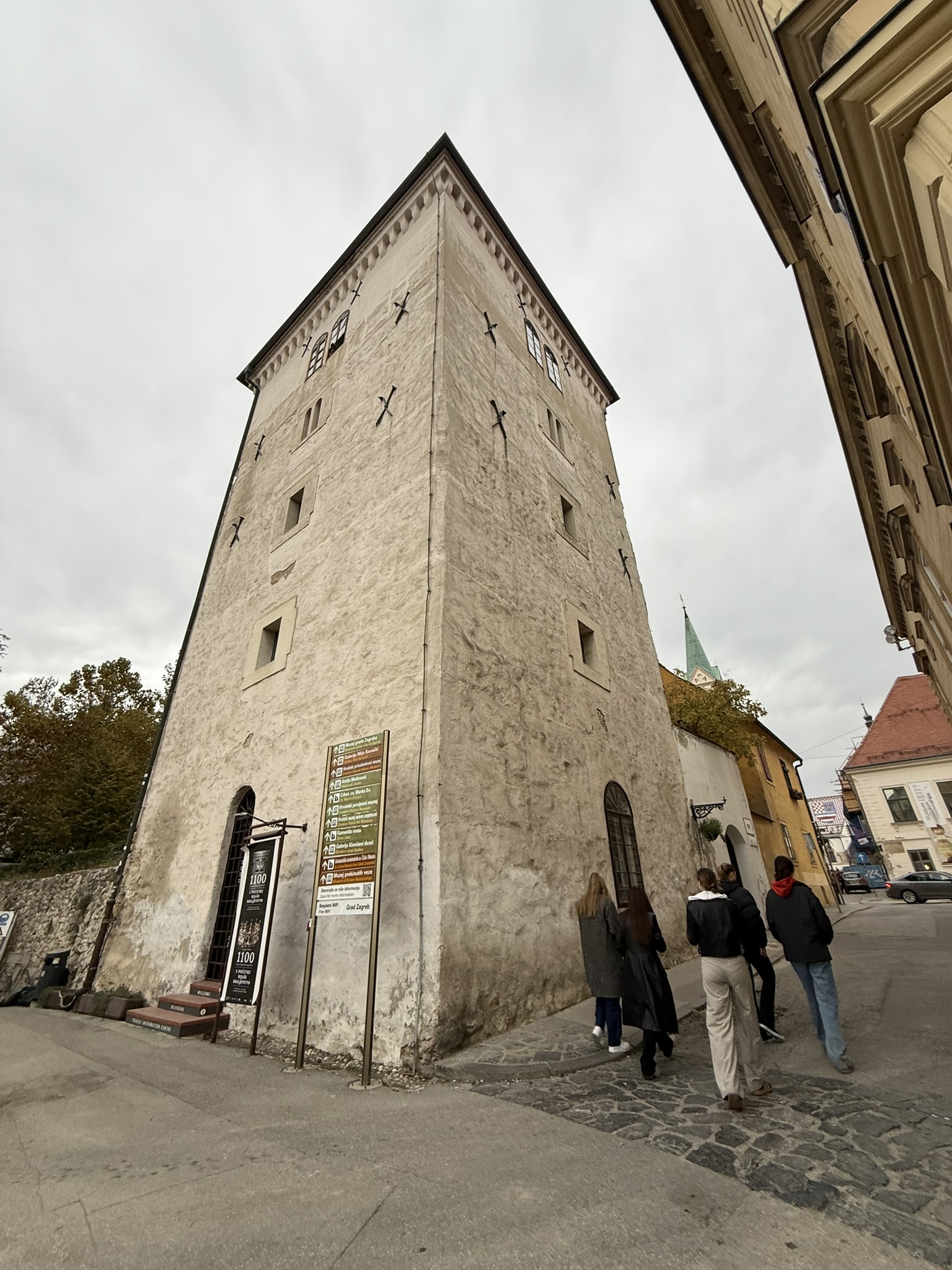
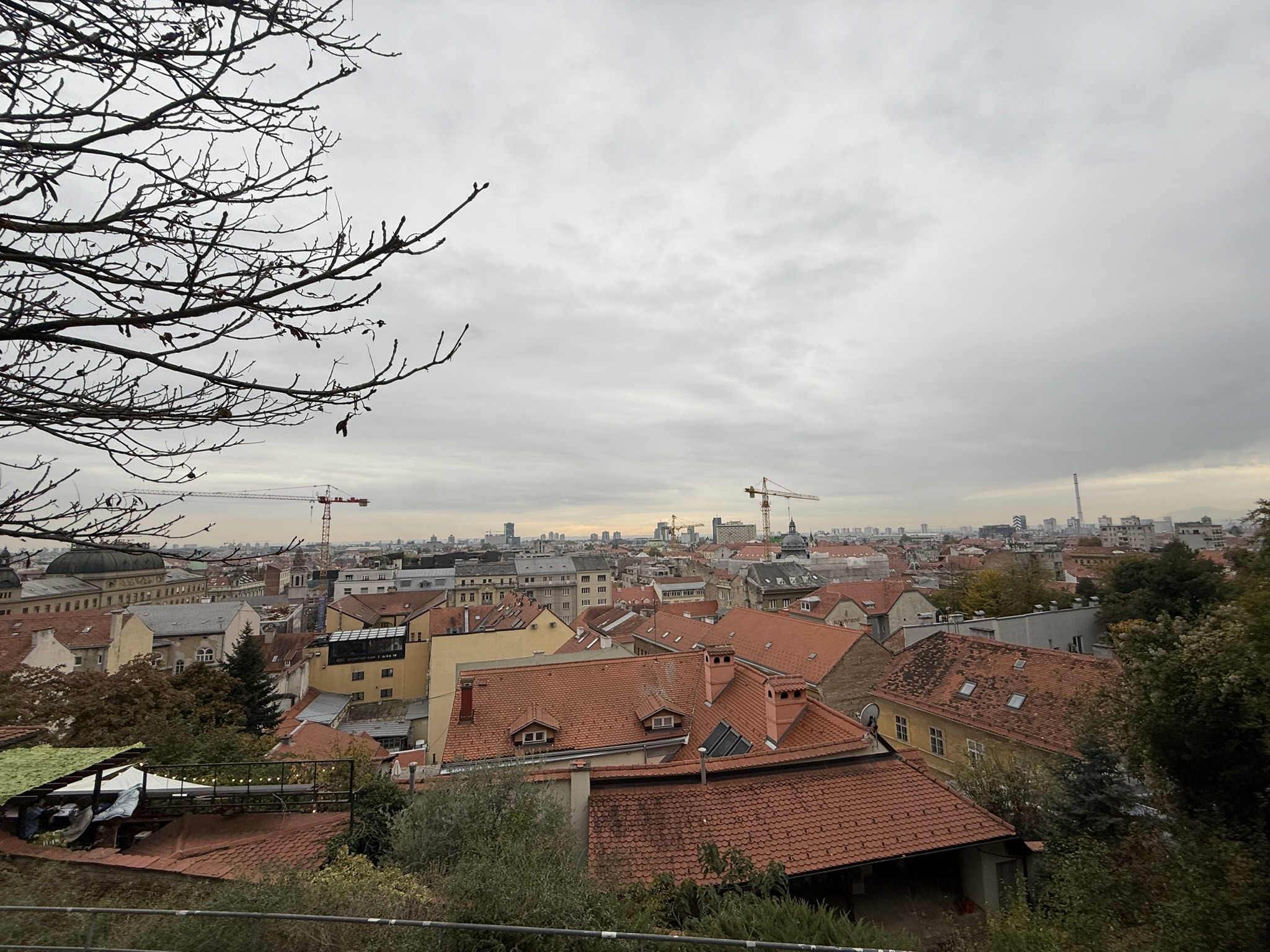
Shopping & the ‘Centar’ (Donji Grad)
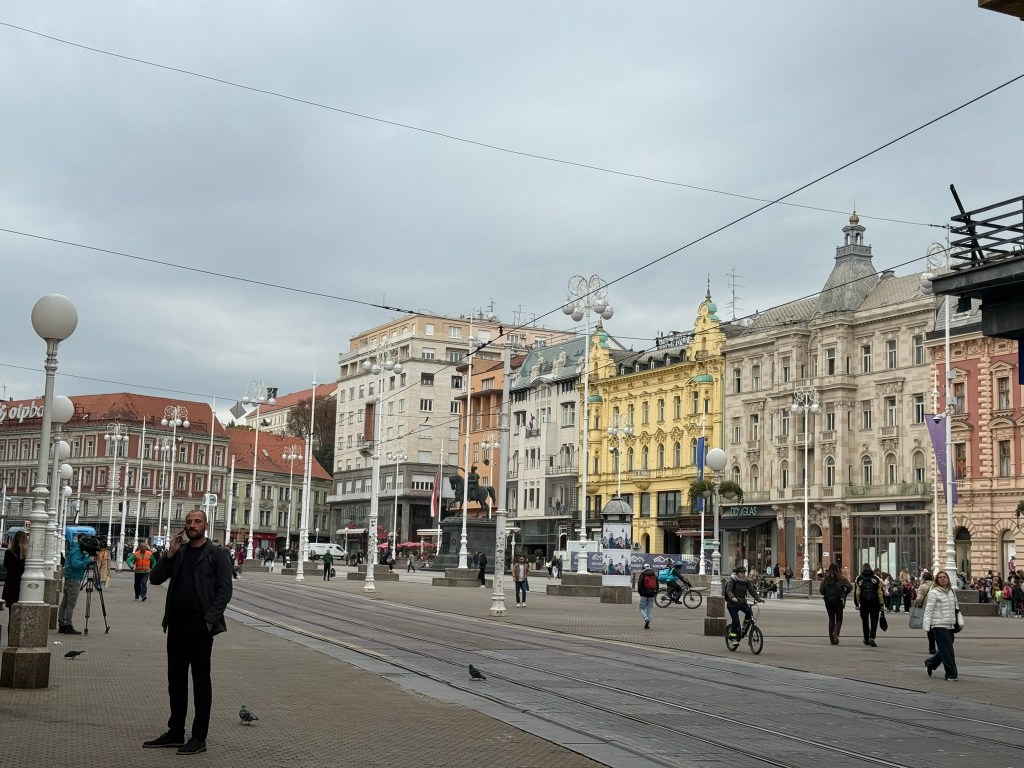
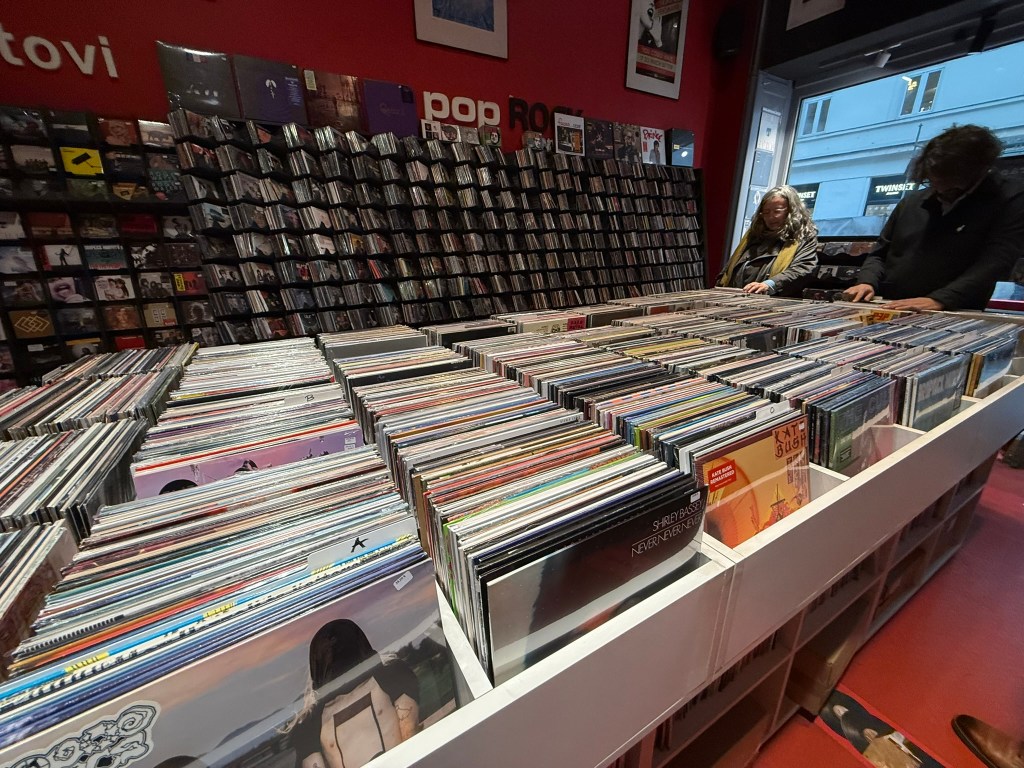
I wandered back down towards the centre of Ban Jelačić Square. Surrounding it is department stores, cafes, bars and restaurants. There’s also countless streets winding off from the square, including the east-west main one, Ilica Street. The street has trams rushing down it, a constant buzz, countless businesses down it (even a vinyl shop!), and many places to grab a coffee, which is exactly what I did.
At this point, I did a mini loop of the area. Again, there’s so much to see here, loads of museums, smaller attractions & historical nuggets, ‘must see’ cafes, arcades, plazas etc. You just can’t see all the small bits in one day. What I did was aim towards the ‘big and important’ buildings, and allocate some structured wandering time in between. Now, almost all of that time I ended up spending in a record shop, despite having a backpack with me, and that’s all for the whole trip. Regardless, in that time, you could naturally stumble upon some of your own hidden gems and attractions, and that’s why exploring loosely is so fun! Either way, my first stop was southeast.
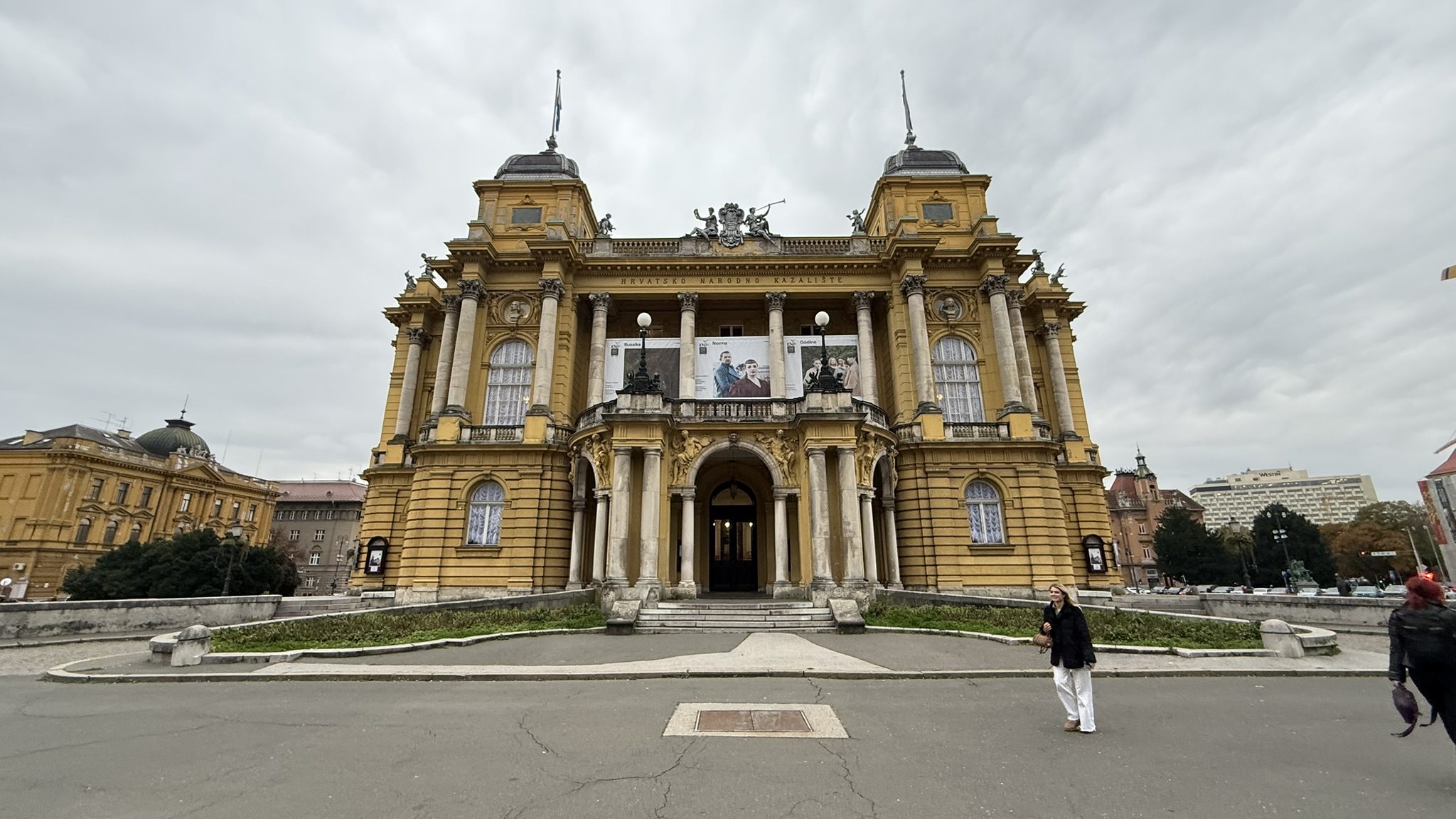
I made it to the Croatian National Theatre by the University. The building has an opulent yellow exterior, decorated in the imperial Habsburg design. As for tickets, for European standards, prices seem very reasonable. Looking now, Hamlet isn’t sold out in May (as of early March), with great tickets below X30, and some for X13. That being said, book in advance, the popular plays seem to sell out a good few months before the date. If you’re not fussed on the play, though, tickets for whatever’s on tomorrow can be found for literally a couple of euros at times. And to add to it all, the inside looks straight out of a novel, so 100% worth the price.
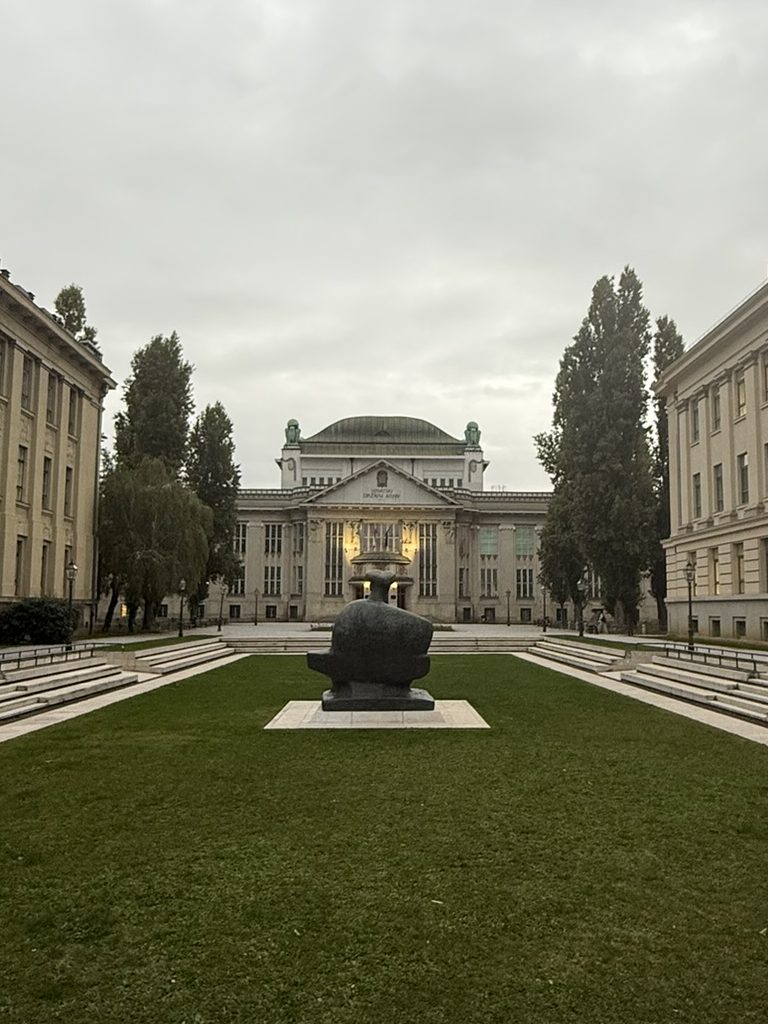
Just south is the Academy of Dramatic Art, along with a couple of other college buildings. I think that strip is largely just Zagreb Uni’s city campus, and it looked and felt amazing. I can’t imagine studying somewhere like that. In the middle of the grounds is a monument to ‘Marko Marulić’, a very important Croatian literary figure. Which leads to the Hrvatski Državni Arhiv, which sits at the end of the row of buildings. This is the central scripture archives, a government building that processes and preserves any artefacts, literature and scriptures relevant to Croatia. If you’re interested, guided tours can be found here.
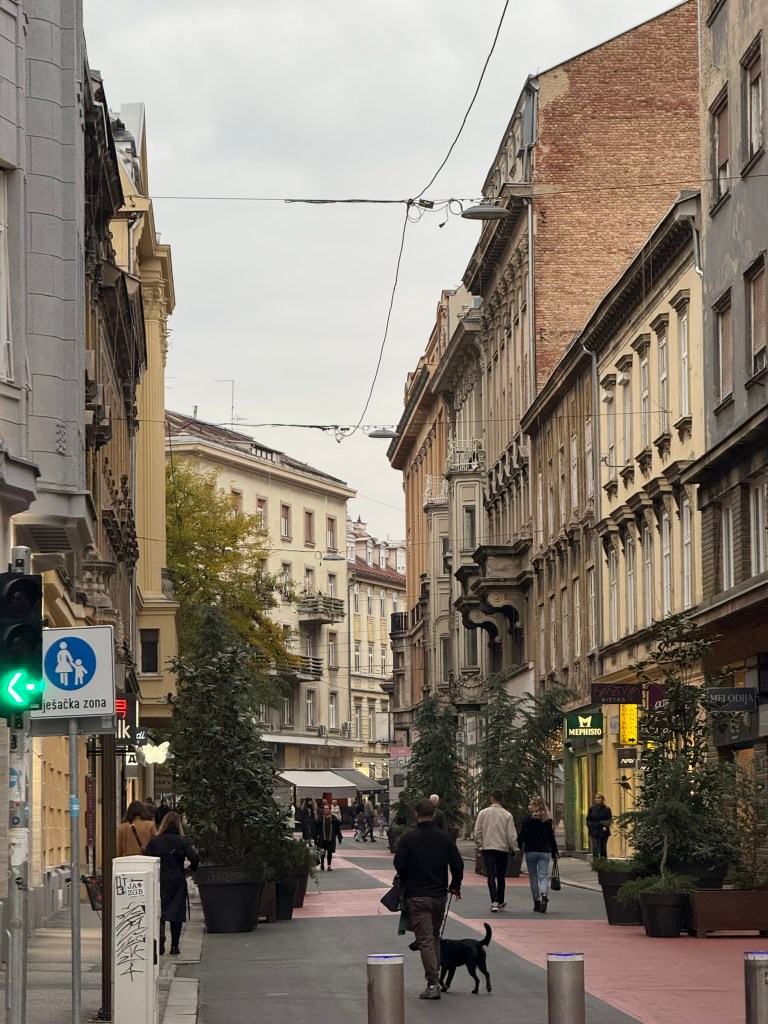
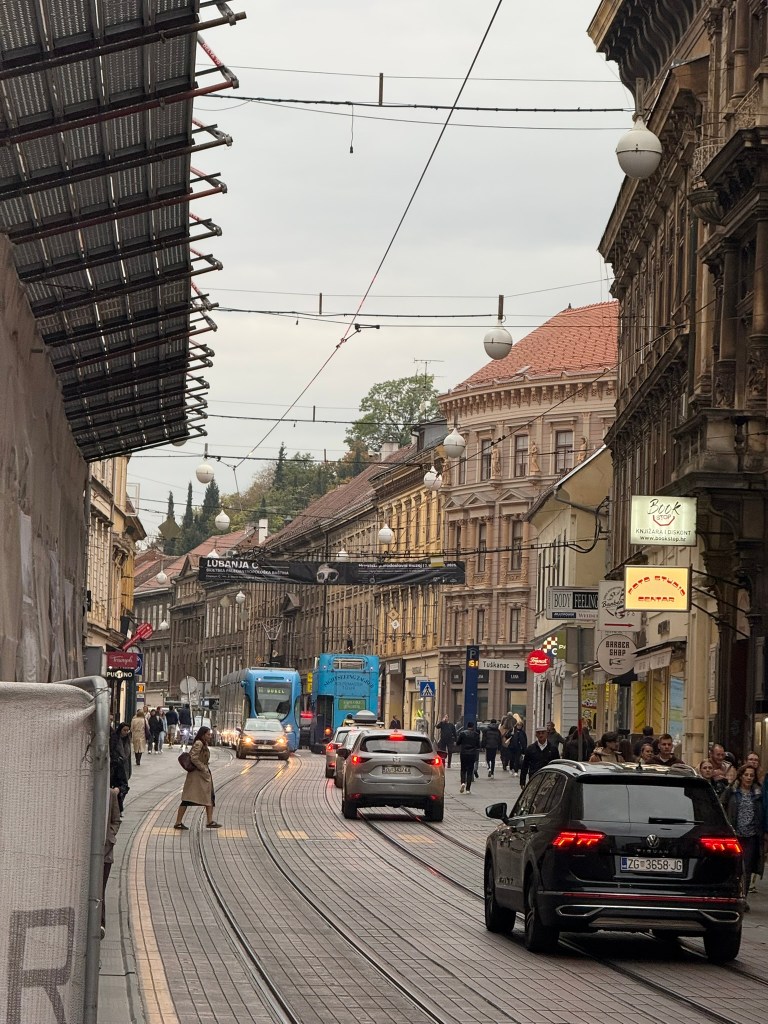
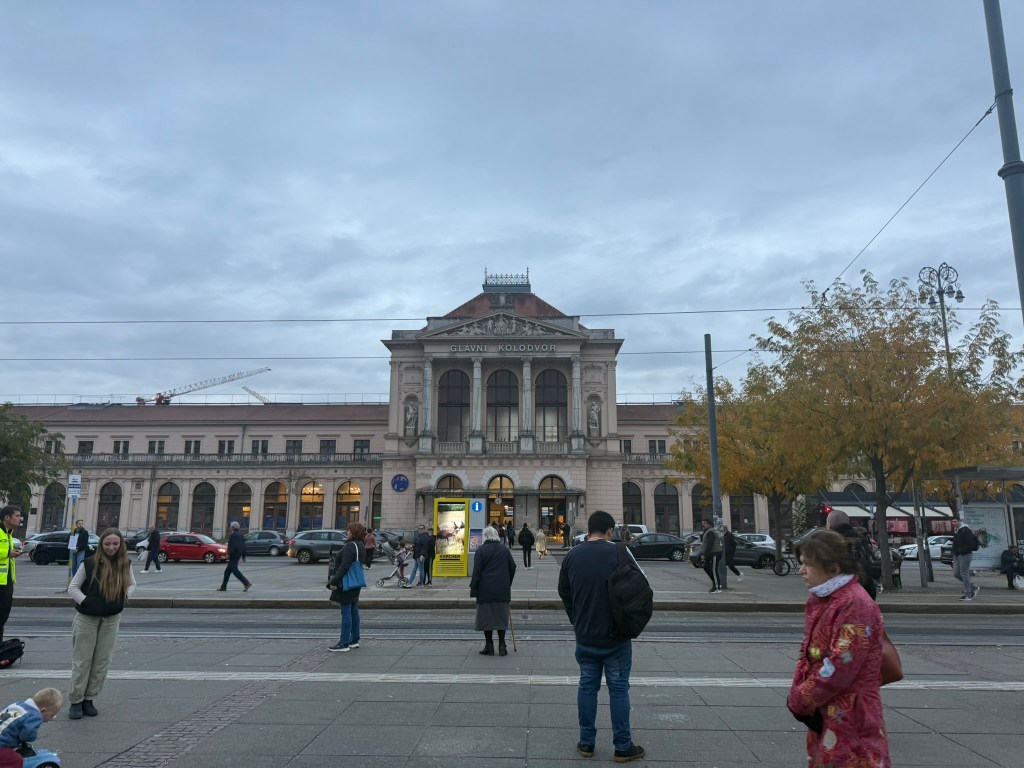
Heading east, I bee-lined towards the train station. North of the entrance is a public park, with another strip of grand architecture. My hostel was right next to this, so the rough route was northeast. First of all, the station itself has a very imposing façade, with a grand park opening up the view. I didn’t have time to explore the area much, as it was slowly getting dark, but there seemingly is a whole shopping centre underneath the station and plaza.
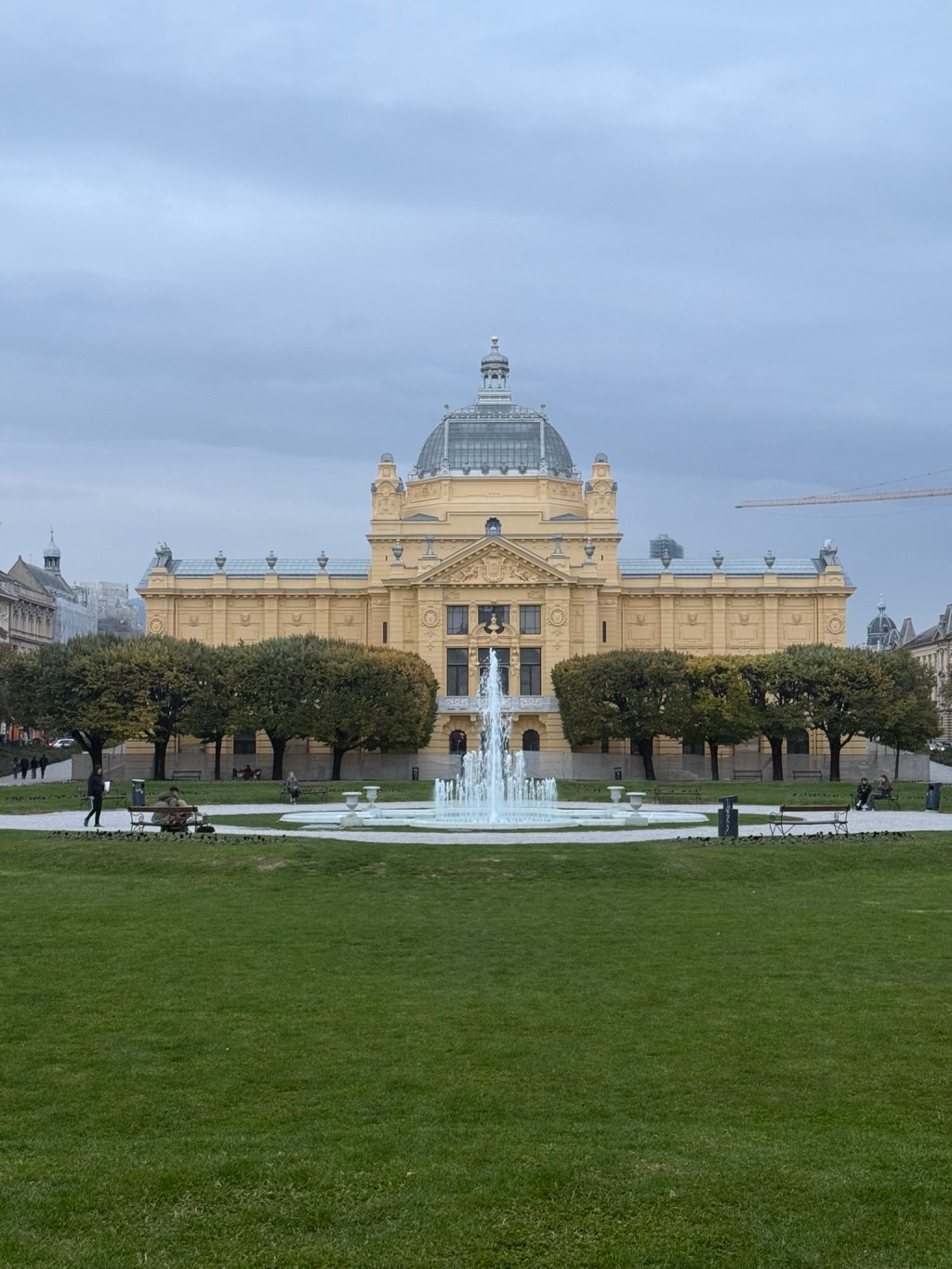
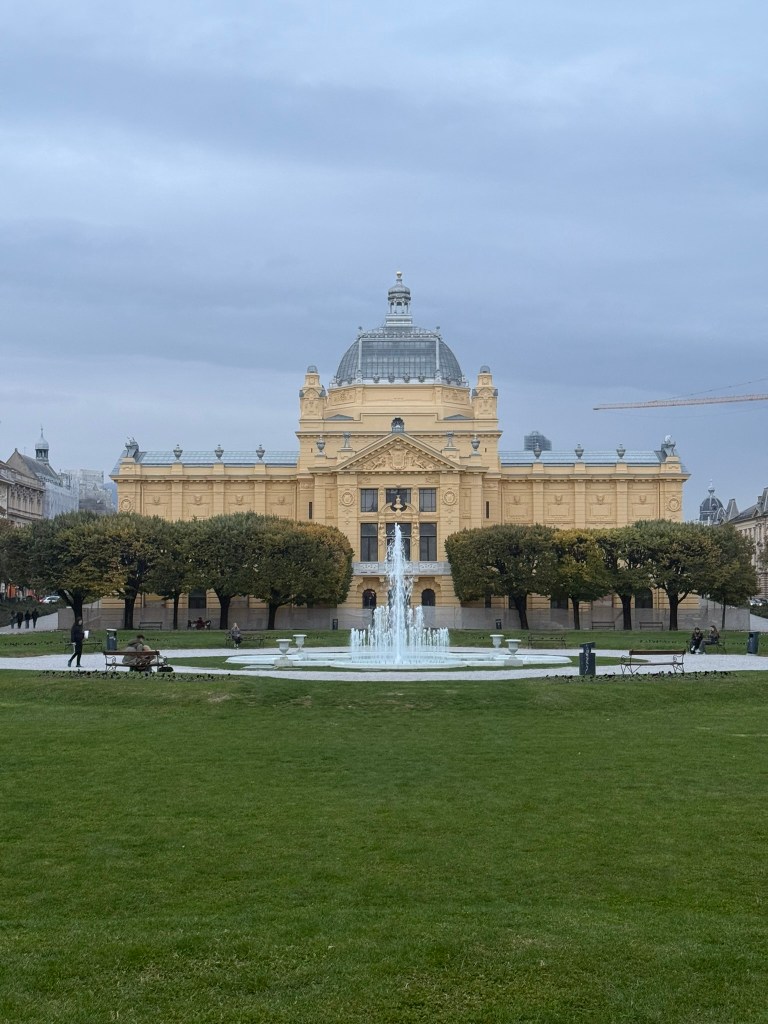
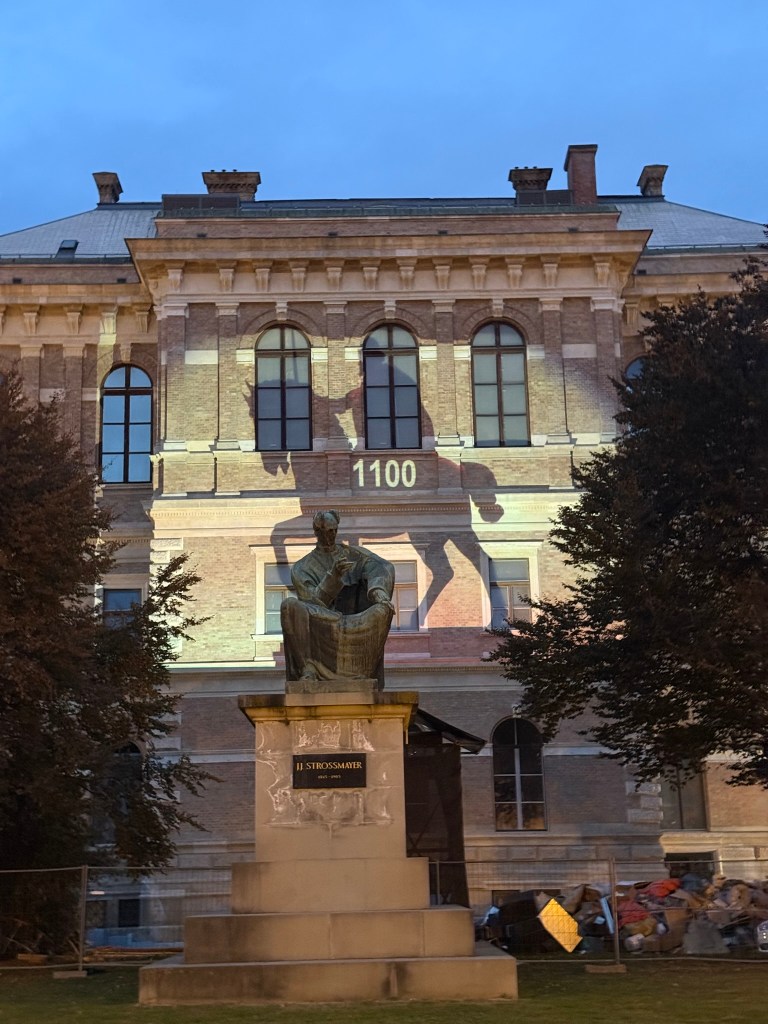
Moving up north, there’s a fountain, gardens, and an arguably even more impressive yellow Habsburg-era building, in the form of the Zagreb Art Pavilion. It’s the oldest art exhibition in south-eastern Europe, is open daily, except Mondays, where the exhibition is rotated weekly to keep things fresh. You could visit it 10 times, and things will still be new. Tickets are between €5-10 on the door, depending on the exhibition that week. North of the pavilion is the Strossmayerova Galerija, a fine art museum, and another university building, all equally impressive. Once I reached here, the sun had all but set, and I was at my hostel, so I checked in and freshened up a bit.
dining & nightlife
As I had the rest of the evening free, I wanted to take it slow and enjoy myself. Get a couple drinks, a full meal, and a dessert; plenty of relaxation and nourishment for a long day of constant travel tomorrow. So, with my bag dropped off and a quick shower, I hit the town.
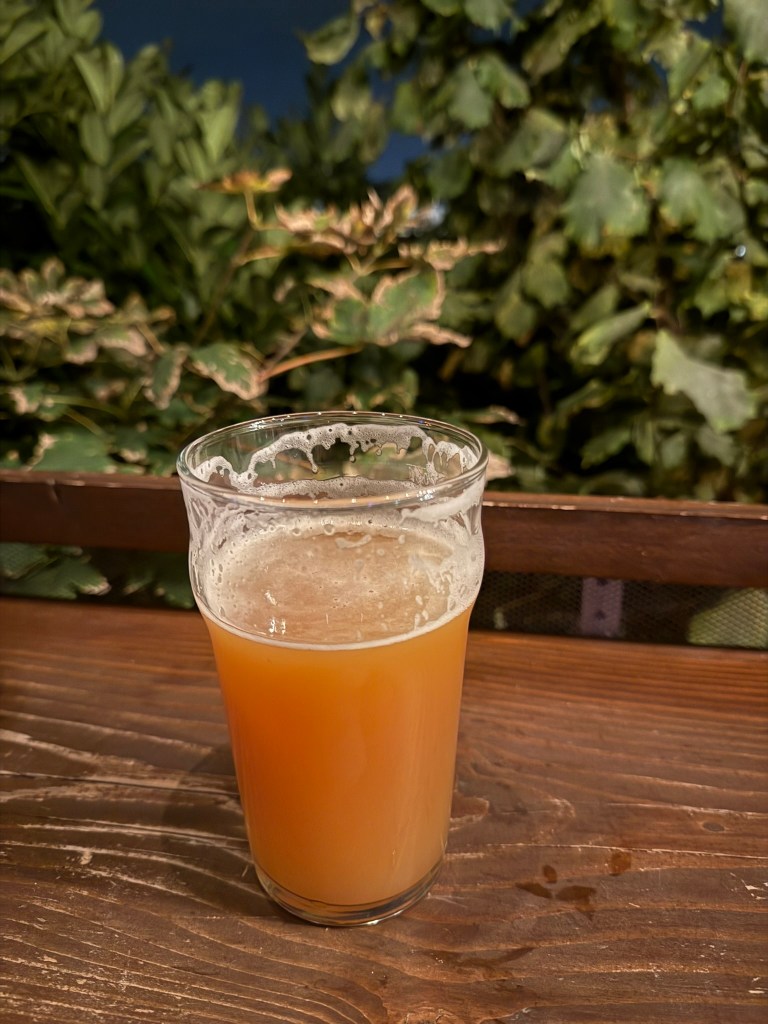
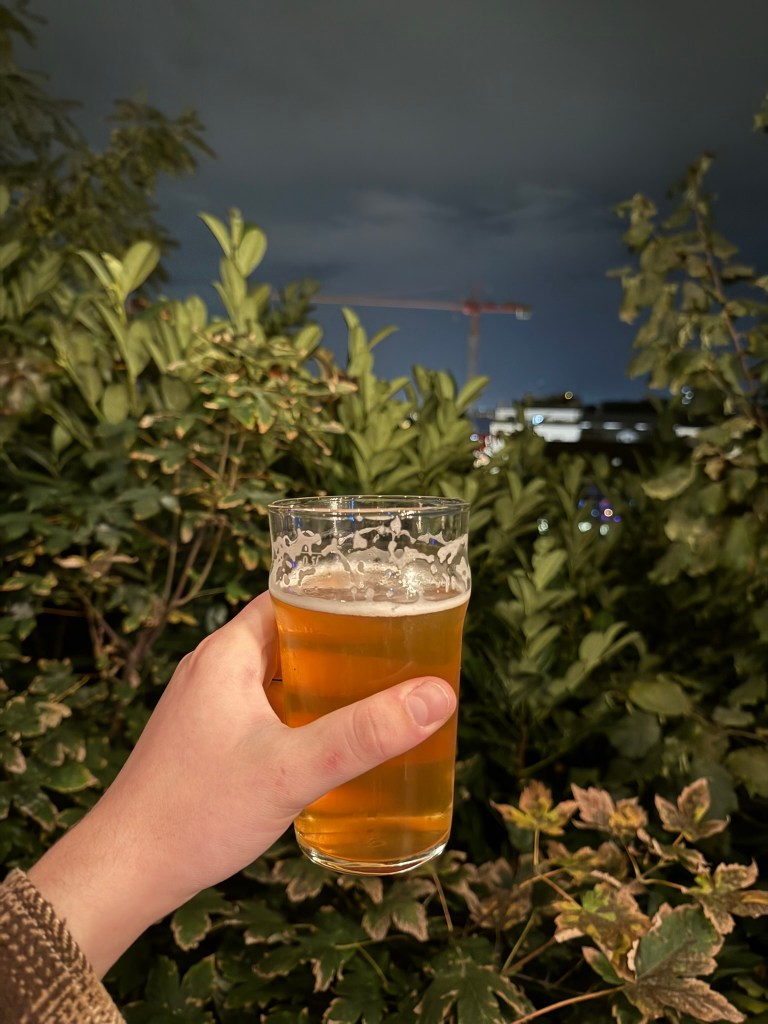
The main square and winding streets sprawling up into the old town transform when the sun sets. Really, from what I saw, any square in the general centre is full of life at night. I’d usually stop and wander, but I had my eyes firmly set on the cafe/bar I walked past earlier by the Lotrščak Tower, so that’s where I went. It so happened to be a craft beer place, or at least they had a good few local lagers and IPA’s on offer. Maybe this is just more common in this part of Europe, but between Ljubljana and Zagreb, I mostly just drank local drinks. I had a couple beers for €3 each, enjoyed the view, and went down into town to look for dinner.
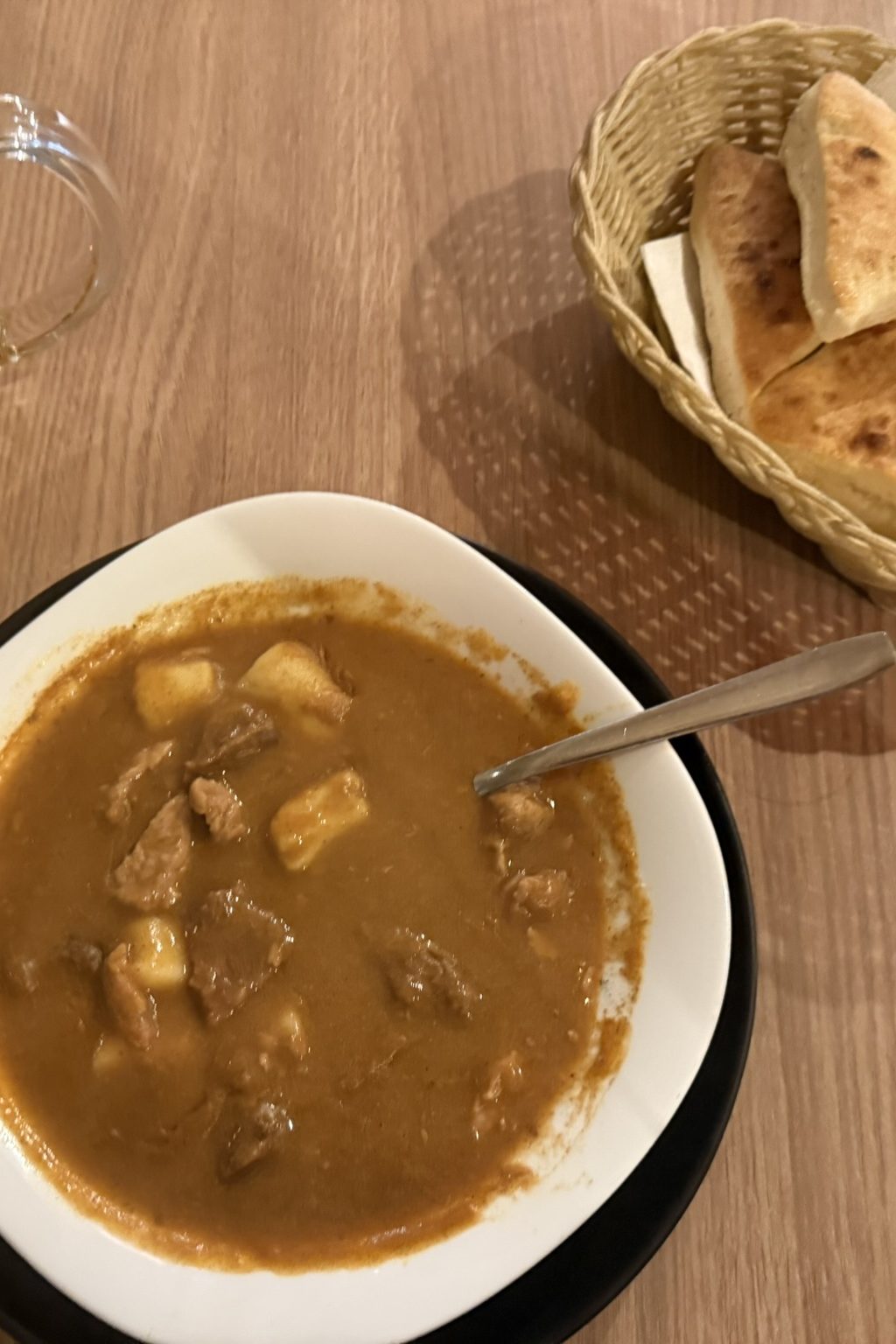
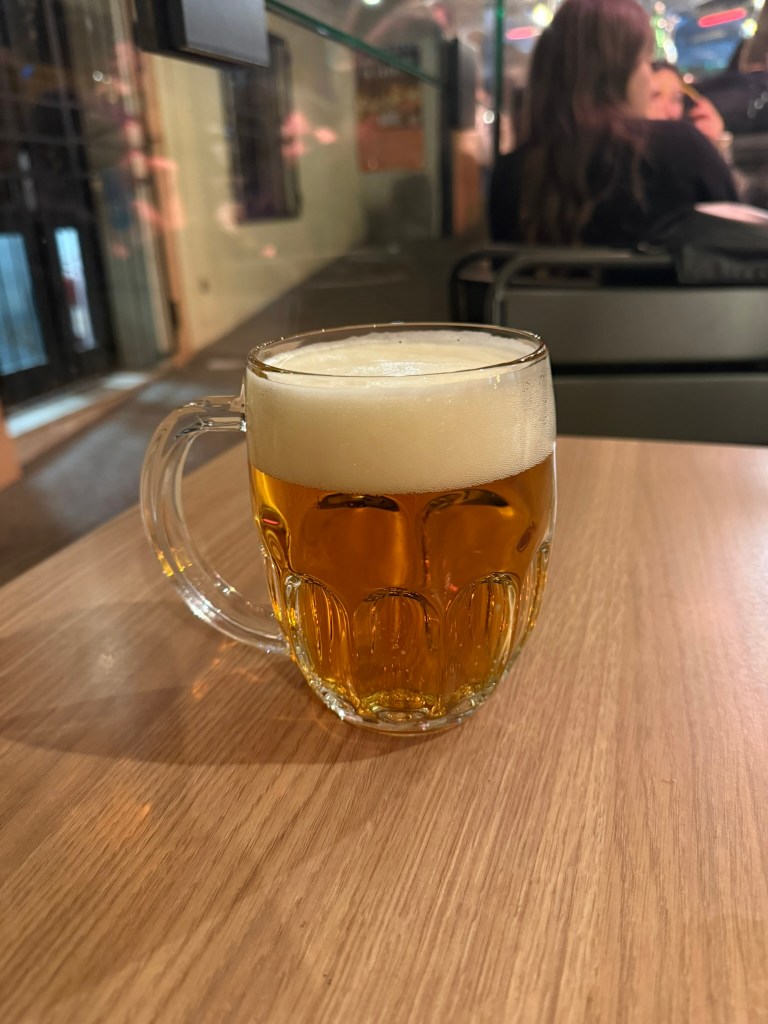
Fresh off the failure that was Ljubljana, where I completely failed to eat local food the day before (read more here), I was adamant to try local food. I did some quick research, decided on a Goulash, and scouted for a good-looking restaurant. To be honest, in hindsight, I should’ve tried something else. Goulash is cooked in this region, like much of Europe, but it’s less frequently eaten than it is in many other central European countries. I did have a more ‘Balkan’ version, Pivski gulas/pub stew, which is pork braised in beer with gnocchi chunks, a meatier sauce, and what looked like cream stirred in, making it kind of like a pork beer paprikash? Croatians, please let me know what this dish actually was! It was delicious and unique to me, but I can’t help but feel like I could’ve tried something a bit more ‘Croatian’, maybe next time. Either way, the pilsner was €2.50 and better than any UK-brewed draft; the main and side of bread was €10. Not the cheapest place out there, but for the quality, it didn’t break the bank too much.
After all that exhausting eating, I worked up an appetite for something sweet, naturally. At this point, it was approaching 11PM, so I was selecting from an ever-narrowing choice of late-night bakeries/confectionery shops. I had done some research beforehand, and had set my eyes on a Kremšnita, a sort of cream cake similar to a vanilla/custard slice. It’s two thick layers of crispy pastry, filled with a layer of vanilla custard, and a layer of whipped cream. It’s very popular in the region, particularly in Croatia, where it’s from.
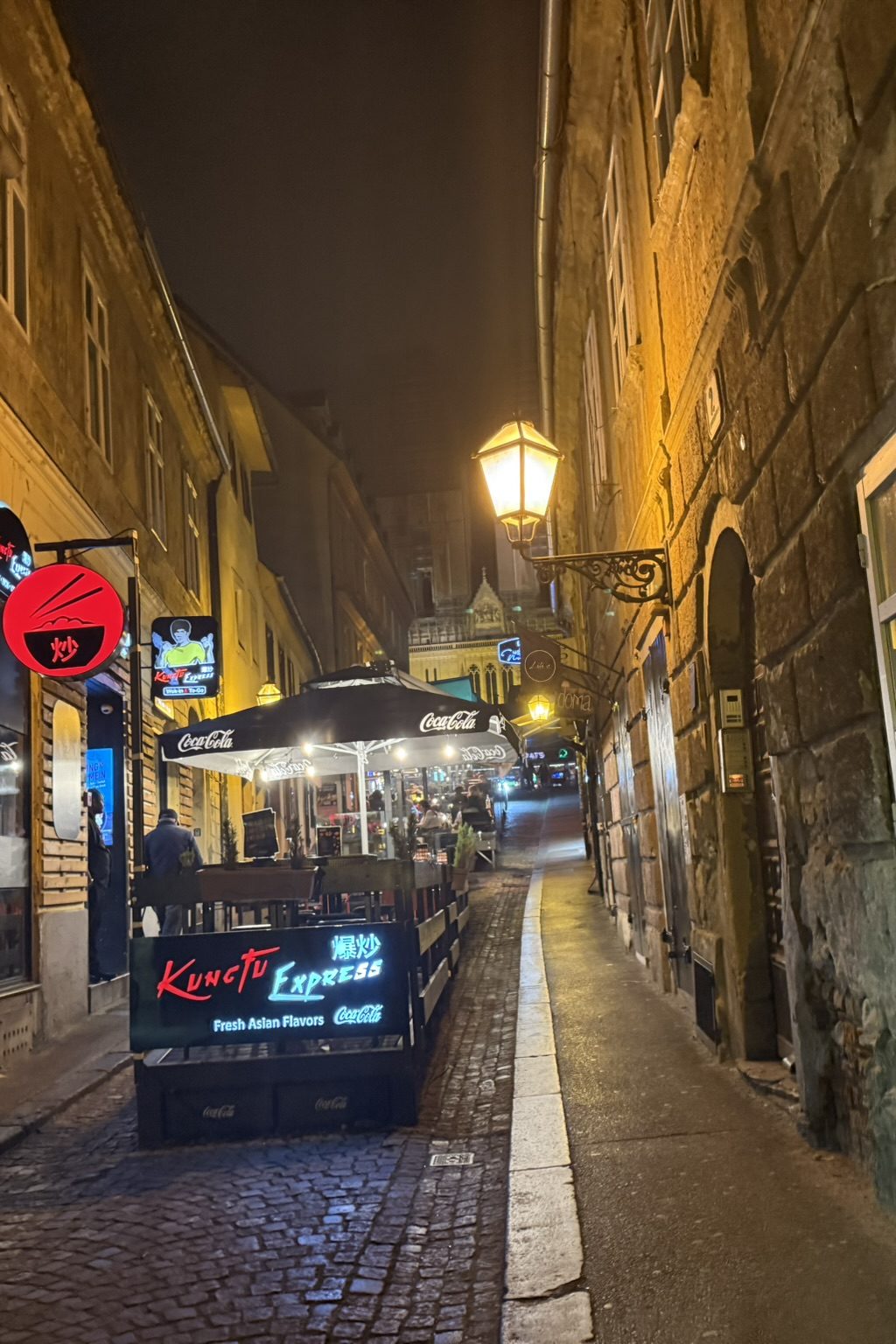
The only bakery that was open (after the first one was closed, despite maps saying otherwise), was ‘Slasticarnica Zagreb’, smack dab in the city centre, but a bit off from the main road, so on the way to, and back from getting my desert, I got to wander around the hidden corners and courtyards of Zagreb at 10:30. I saw lit up pedestrianised spaces, swarths of closed markets and outdoor seating, but with dots of activity, with some completely packed outdoor spaces and restaurants and people walking around. Overall, there was just such a buzz considering the size of the city, and I think that’s an important metric when visiting a place.
When I got to the shop, I got my Kremšnita for €3.20 and headed to Park Zrinjevac, the top garden of the strip of green space right by my hostel. The fountains were still going, and the orange old-school lights gave the setting such a cool, moody atmosphere. Most importantly, the cake was delicious and exactly what I needed before crawling back to my potentially bug-infested bed by midnight, and undoubtedly waking everyone up again at 3AM, when I had to wake up and catch my flight out.
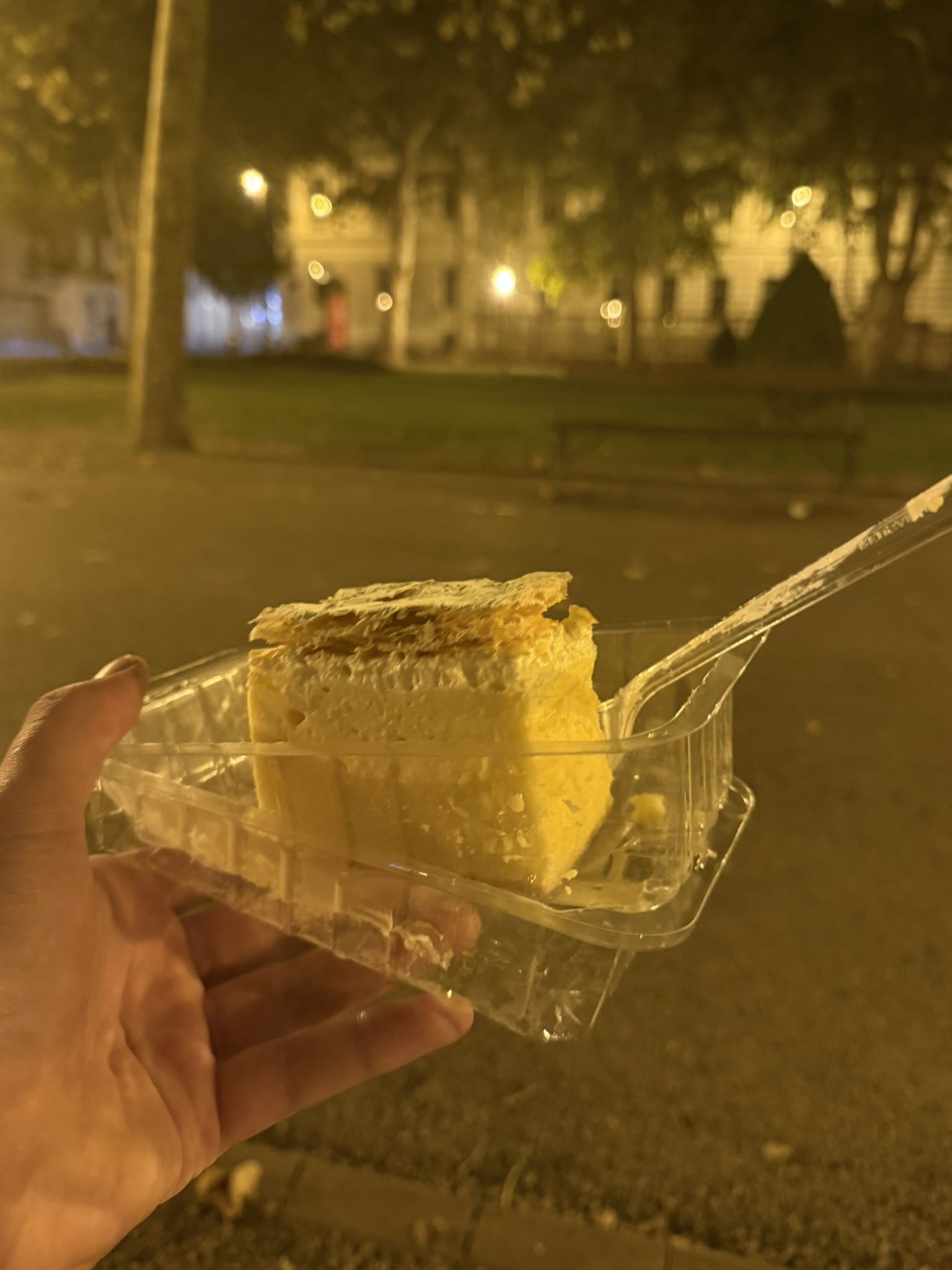
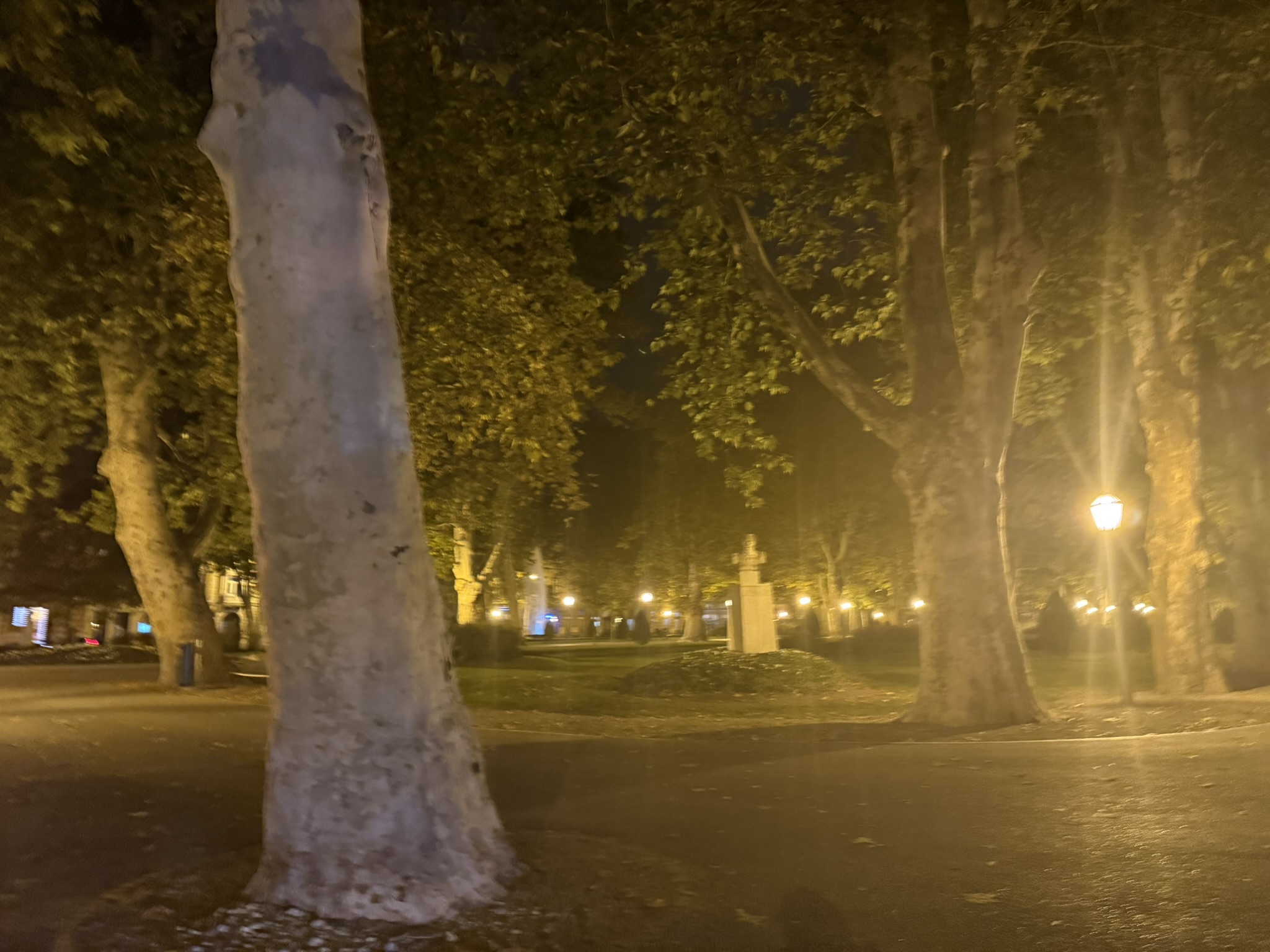
The Kremšnita (Left) & Park Zrinjevac with the orange lights (right)
reflective thoughts
Predictably, one day in any city, especially a European capital, isn’t enough time to see it all, not even close. That being said, I’m very glad I went to Zagreb. I also think the time of year was pretty good, too. Of course, the summer months will be busier, but hot, and the city doesn’t see nearly as much tourism as other capitals, even in peak seasons. I wouldn’t want to go any later, though. It gets pretty cold here, and it often snows in the winter months. If you like the snow, by all means go then, but it felt like a warmer place to me, so any time after October and before March I’d personally avoid, but it isn’t a ‘seasonal city’, and you can go all year round without having much be closed off.
I also think the city was sadly very heavily affected by the 2020 earthquake, and while it’s healing, there are still scars in the form of closed attractions and places. It’s getting better day by day, and the difference between October 2025 and March 2026, while writing this, is even pretty substantial. So, if you’re planning to go this spring/summer or the next few years, I think more will be open, and the city will just keep on improving over time.
I actually think I did the city justice in the time I had. Aside from not going to see a play, going to any museums, or any other popular spots a bit further out the city centre, which I obviously can’t do in a day. I would have probably changed my dinner if I had to nit-pick, but it was spontaneous and fun, so I can’t really complain! If you’re after a larger city with a similar Eastern European vibe, but a different culture, check out my Budapest blog here!
I would highly recommend going on a guided city tour. Even if you’re there for a day like me, I think it would be worth the money, some being free, most being ~£10-15, as there’s so much history going on in such a short place. They also only take a couple of hours, so you can do it and still have plenty of solo-exploration time in one day. You can find tours here. If you have more than a day, I’d also go for a day trip to the Plitvice Lakes / Watermill village, it looks incredibly pretty in the summer, whimsical in the autumn, and becomes a frozen wonderland in the winter, so 100% worth it all year round. The day trips can be found as cheap as £30, but are more often more expensive, and can be found here.
And if you liked this post, you can check out some similar posts here. As I mentioned at the beginning, this is a part of a series, where I did similar 1-night trips to Venice and Palma, but I’ve also done one to Marrakech, and a Barcelona blog is on the way!

Leave a comment